Generally, peptide involves in a wide range of areas of human body, such as hormones, nerves, cell growth and reproduction; its importance lies in regulating the physiological functions in vivo and cell activation, enabling to improve in vivo related enzymes and then promote permeability of middle membrane. In fact, peptide can ultimately produce a particular physiological effect by controlling the transcription of DNA or specific protein synthesis. Many peptides are involved in a variety of cell functions in the human body because they can synthesize cells and regulate the functional activity of cells. But, except for DOTA-cyclo(RGDfK) Acetate and Aviptadil Acetate, how many kinds of peptides are there?

Cytokine Mimetic Peptide
Using known cytokine receptors from peptide library to screen cytokine mimetic peptide has become a debated research in recent years. In terms of some countries, they have screened a spectrum of analog peptides, such as human erythropoietin, human thrombopoietin, human growth hormone, human nerve growth factor and interleukin-1, etc. Amino acid sequences of these mimetic peptides and their corresponding cytokine could be different, but they are possessed with cytokine activity, as well as the advantage of small molecular weight. These cytokines mimetic peptides are in preclinical or clinical studies now.
When insects are stimulated by external environment, they can produce a large number of cationic peptides with antimicrobial activity. And nearly hundreds of such antimicrobial peptides have been screened yet; the in vivo experiment has confirmed the discovery that a plurality of antimicrobial peptides not only own a strong bactericidal ability but also can kill the tumor cells as well. For example, the antimicrobial peptide D screening from silkworm in vivo has demonstrated great prospects in improving genetic engineering techniques.
Peptide for Cardiovascular Disease
Many plants medicines always show importance in blood pressure, blood fat, thrombolytic effects, and so on. They cannot only be used as drugs but also the dietary supplements. However, due to the uncertainty of its ingredients functions, their application has been limited. It has been found many active ingredients are small peptides, such as the active polypeptide isolating from soybean processing, which can be directly absorbed by the small intestine, enabling to prevent blood clots, hypertension and high cholesterol, but also delay the aging and improve body strength tumor.
Other Pharmaceutical Small Peptide
Small peptide drugs have gained considerable progress in many fields. For instance, scientists have found that a synthetic peptide (TP508) can promote wound regeneration of blood vessels, accelerating the skin depth of the wound healing. Researchers also found a small peptide (RTR) can be used to inhibit the inflammatory response. In fact, the screened two synthetic peptides can be utilized for the inhibition of osteoclast’s resorption in bones.
To be specific, peptides have been used for various applications including medication, food, disease, etc. In addition to these peptides discussed above, there are also some other kinds, such as diagnostic peptides, which can be significant in the diagnostic reagent, as an antigen to detect viruses, cells, mycoplasma, spirochetes and other microorganisms. Success requires continuous discovery, so does the life science research!
]]>
Actually, active peptides were found in 1920 but they aren’t studied by more experts until 1958. In 1958, a Jewish-American professor at the University of California showed his research results on active peptides to the public community. After 38 years of painstaking research, the study was regarded as a successful advent using recombinant technology, which could control the quantity, quality and speed of protein synthesis, as well as human diseases and aging.
Specifically, active peptides such as acrorhagin could be a kind of substance (the body’s own secretion) in the nerve tissue and other tissues or organs. Involved in the growth and metabolism of protein, fat and sugar, active peptides control the normal rate of protein synthesis with the increasing or decreasing secretion amount. In 1990, Dr. Rudman formally proposed to explain the theory of human disease and aging causes, using active polypeptide in anti-aging and disease prevention for the first time.
In the experiment, some scientists found that active peptides could closely monitor the expression and replication process of cells just like an automatic operation. When cells divide and replicate normally, active peptides ensure the normal synthesis of proteins and normal cell division. When an error occurs during cell division, active peptides immediately command error cell replication to stop and fix it. Active peptides can promptly cut, splice and repair exception error cells to ensure the normal protein synthesis, enabling the body in a healthy state.
Scientists believe active peptides are the headquarters for human health. Divided by age, active polypeptides in childhood to adolescence own more secretion, which is intended to enable the body to grow rapidly, and the appropriate secretion would maintain until about 25-30 years old. Upon reaching 30 years old, bioactive polypeptides will gradually reduce the secretion.
When the secretion of active peptides in human body is sufficient and owns high activity, activation of abnormal diseased cells in ensuring human health might be necessary. Anyway, supplementing active peptides on the prevention and treatment of cardiovascular, bone and joint diseases, endocrine system diseases, gastrointestinal diseases, diabetes and tumors has a very important significance. Active peptides help to decipher the key issues of human sickness and death, which also discover a new era for the treatment of varying human diseases.
]]>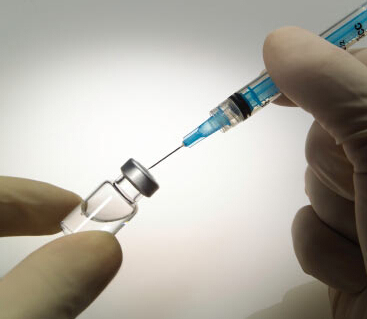
But what is vaccine? Generally, as for its scientific definition, it is a biological product against a specific disease, which obtains immunity mainly from active prevention, making it possible to reduce the incidence of pathogenic ingredients. Clearly, since a long time, a variety of experienced researchers have conducted mass studies about vaccines and they have made great progresses. Modern vaccines have developed rapidly, successfully eradicating a number of dreaded epidemic diseases.
There are several classifications about different types of vaccines. Based on a management perspective, current vaccines can be generally divided into two types: type 1 and type 2. While as for perspective of the use, they can be classified as preventive vaccine and therapeutic vaccine; the latter’s mechanism is not entirely clear, meaning such research in the international community is still in the early stage of exploration. In terms of modern marketing vaccines, from the functional point of view, vaccines can be divided into bacterial vaccine, viral vaccine, toxoid vaccine, subunit (component) vaccine, polysaccharide conjugate vaccine and combination vaccine. For a technical point of production, vaccines are divided into attenuated vaccine, inactivated vaccine, recombinant vaccine, synthetic peptide vaccine and the like. All of these vaccines have played an important role in modern new drug design.
Vaccines have high prevention efficiency and safety, enabling them a cost-effective tool for public health systems. Vaccination is the most basic preventive medicine and its promotion is also the most convenient, but the wide range of applications and better security cannot be ensured merely because of its low cost. Media also choose to ignore the issue as well. In fact, vaccines generally present minor side effects, such as fever emergence and localized swelling. For now, with the advances in biotech, combination vaccines might be the overall trend for the entire vaccine industry, though such vaccines still require different separation and purification.
]]>