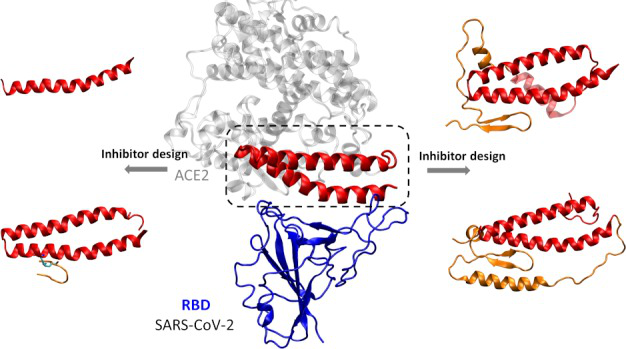
Scientists around the world are intensively searching for inhibitors of SARS-CoV-2. Now, the researchers report on ACS Nano that they have used computer modeling to evaluate four peptides that mimic the viral binding domain of human proteins–a key protein that allows SARS-CoV-2 to enter cells.
To infect cells, SARS-CoV-2 uses its spike protein to bind to the ACE2 receptor, which is a protein located on the surface of certain human cells. This attachment allows the virus to fuse with the host cell membrane and enter. Many researchers have been trying to find compounds that can block key areas of this spike protein, thereby preventing viruses from infecting cells. Yanxiao Han and Petr Kral wanted to use computer modeling to design compounds that mimic the natural target ACE2 of this spike protein.
Therefore, the researchers examined the x-ray crystal structure of the recently published SARS-CoV-2 receptor binding domain when it binds to ACE2. They identified 15 amino acids from ACE2, which directly interact with viral proteins. Then, the researchers designed four inhibitors that contained most or all of the amino acids and added additional sequences that they thought would stabilize the structure. Through computer simulations, the research team studied how inhibitors bind to proteins in the body and the energy required for binding. One of the compounds has particularly good binding to viral proteins. The research team said that the peptide still needs to be tested in laboratories and patients, but the ability to narrow the range of drug candidates on the computer may help speed up the process.
The inhibitor is mainly formed by two consecutive self-supporting α-helices extracted from the protease domain (PD) of angiotensin-converting enzyme 2 (ACE2), which bind to the SARS-CoV-2 receptor binding domain. Molecular dynamics simulations show that the α-helical peptide retains its secondary structure and provides highly specific and stable binding (blocking) to SARS-CoV-2. To provide multivalent binding to the SARS-CoV-2 receptor, many such peptides can be attached to the surface of nanoparticle carriers. The proposed peptide inhibitor can provide a simple and effective therapy against COVID-19 disease.
Although dozens of research teams around the world are using multiple methods to find new treatments for Covid-19, one of the advantages of this peptide drug is that they are relatively easy to mass produce. They also have a larger surface area than small molecule drugs. Peptides are larger molecules, so they can really hold the corona virus tightly and inhibit entry into the cell, and if small molecules are used, it is difficult to block the entire area where the virus is being used. Antibodies also have large surface areas, so they may also be useful. It just takes longer to make and discover. One disadvantage of peptide drugs is that they are usually not taken orally, so they must be injected intravenously or subcutaneously. They also need to be modified so they can stay in the blood long enough to be effective, and Petr Kral’s lab is working on that.
References:
- Yanxiao Han et al. Computational Design of ACE2-Based Peptide Inhibitors of SARS-CoV-2, ACS Nano (2020). DOI: 1021/acsnano.0c02857
Novel coronavirus (COVID-19) is known to cause acute respiratory distress syndrome (ARDS), which causes about 50 percent of ARDS deaths despite intensive care and mechanical ventilation. Therefore, patients with coronavirus infection who develop ARDS are at a particularly high risk. Professor Javitt said: “After carefully reviewing the preclinical and clinical data submitted to FDA for IND and orphan drug certification for Aviptadil, we believe that Aviptadil may be a safe and effective ARDS treatment in general, especially for ARDS caused by COVID-19. Due to the rapid expansion of the epidemic and unusual unmet medical needs, we are prepared to start clinical trials as soon as possible so that potentially life-saving treatments can be brought to market as soon as possible. ”
Acute respiratory distress syndrome (ARDS) is a type of respiratory failure characterized by rapid development of diffuse inflammation in the lungs. Symptoms include shortness of breath, shortness of breath and skin cyanosis. A decline in the quality of life is relatively common among survivors. Causes may include viral infection, sepsis, pancreatitis, trauma, pneumonia and inhalation. The underlying mechanism involves diffuse cellular injury, the formation of microscopic balloon barriers in the lungs, dysfunction of surfactant, activation of the immune system and dysfunction in the regulation of blood coagulation. In fact, ARDS can impair the lung’s ability to exchange oxygen and carbon dioxide. The primary treatment includes mechanical ventilation, combined with treatment for the underlying etiology. Ventilation strategies include low flow and low pressure. If oxygenation is still insufficient, alveolar stretching and neuromuscular blockers can be used. The mortality rate of the syndrome ranges from 35% to 50%. Worldwide, ARDS affects more than 3 million people every year.
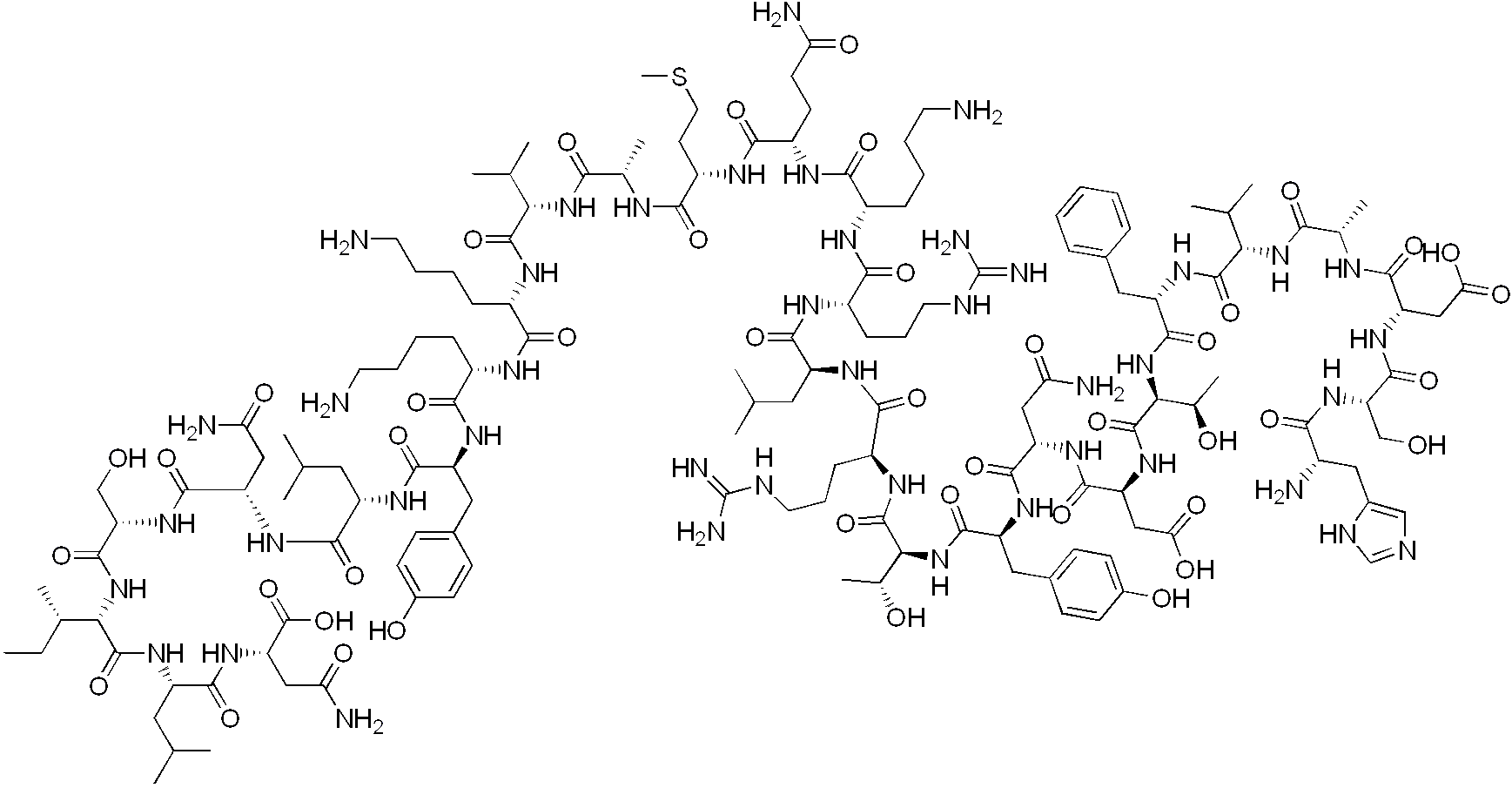
Aviptadil is a patented dosage form of vasoactive intestinal polypeptide (VIP). VIP was originally developed as a combination of phentolamine and is now sold in Europe for the treatment of erectile dysfunction. It is known that VIP is highly concentrated in the lung and can inhibit a variety of inflammatory cytokines. In 2001, Aviptadil was certified by American FDA Orphan Drug for the treatment of acute respiratory distress syndrome, and in 2005, it was certified for the treatment of pulmonary hypertension. Aviptadil was certified as an orphan drug by the European Drug Administration in 2006 for the treatment of acute lung injury and in 2007 for the treatment of sarcoidosis. Both FDA and EMEA in the United States have issued licenses for new drugs under development in Aviptadil Phase 2 human trials. The University of Freiburg in Germany is currently conducting a clinical study to evaluate the effectiveness of Aviptadil in patients with pulmonary sarcoidosis.
A large number of animal studies have shown that Aviptadil may reduce pulmonary inflammation in a variety of models and edema. Human phase 1b/2 studies (involving a total of 76 patients) have shown that Aviptadil has the potential to relieve bronchospasm, reduce pulmonary hypertension and treat other features of pulmonary inflammation in some cases, including a significant reduction of alpha pro-inflammatory cytokine tumor necrosis factor (TNF–α). Among them, a phase 2 preliminary trial of Aviptadil in 8 ARDS patients showed excellent safety and encouraging signals of potential efficacy.
References
- Jahangir, M. A., Muheem, A., & Rizvi, M. F. Coronavirus (COVID-19): History, Current Knowledge and Pipeline Medications. Int J Pharm Pharmacol 2020; 4: 140. doi: 10.31531/2581, 3080(2).
- Keshavarz, A., Kadry, H., Alobaida, A., & Ahsan, F. (2020). Newer approaches and novel drugs for inhalational therapy for pulmonary arterial hypertension. Expert Opinion on Drug Delivery, 1-23.
- Sommer, N., Ghofrani, A., Pak, O., Bonnet, S., Provencher, S., Sitbon, O., … & Kiely, D. G. (2020). Current and future treatments of pulmonary arterial hypertension. British Journal of Pharmacology.
]]>