
Diabetes mellitus (DM) is a group of metabolic diseases classified by chronic hyperglycemia resulting from defects in insulin secretion, insulin action, or both. Diabetes is prevalent worldwide and the number of patients is drastically rising, with a predication of 366 million in 2030 due to factors such as obesity, inactivity, aging, and hormonal disorders. While there are many available treatment regimens for type 2 diabetes, some of the older therapies can cause undesirable adverse events, including hypoglycemia, hunger and weight gain. The latter is particularly problematic as insulin resistance is strongly correlated with obesity. Some other related metabolic complications include cardiovascular disease and dyslipidemia, all resulting in an increased risk of mortality.
Introduction of GLP-1
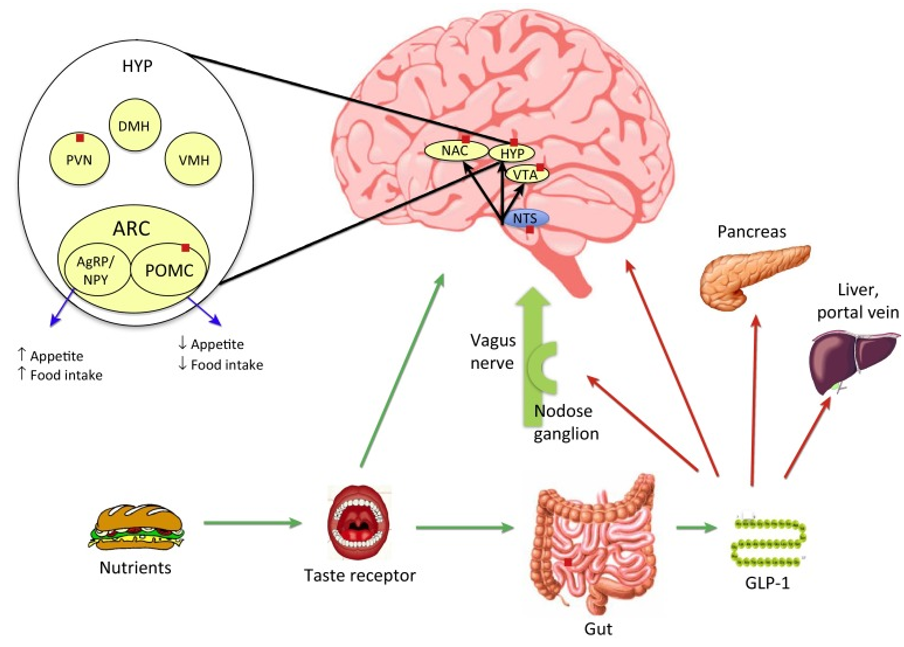
GLP-1 is a gastrointestinal peptide that stimulates glucose-dependent insulin release from pancreatic islets, slows gastric emptying time, inhibits inappropriate post-meal glucagon release, and ultimately reduces food intake. GLP-1 actions are mediated via the high affinity GLP-1 receptor. Impaired secretion of GLP-1 can contribute to type 2 diabetes. GLP-1 also induces satiety, resulting in lower voluntary caloric intake. These mechanisms together allow for significant blood glucose control and meaningful weight loss.
The advantages of GLP-1 drugs
Insulin therapy has a high risk of hypoglycemia, while GLP-1 is hypoglycemic in the form of glucose dependence, so the risk of hypoglycemia is extremely low. Most patients with type 2 diabetes are obese, and further weight gain associated with insulin injection can exacerbate metabolic disorders and diabetes-related complications (including microvascular and macrovascular complications). The weight loss effect of GLP-1 drug therapy is very beneficial to patients with diabetes. More importantly, its cardiovascular benefits provide excellent clinical compliance for long-term GLP-1 treatment.
The challenge of GLP-1 drugs
Compared with insulin, GLP-1 has a unique biological function, and its hypoglycemic effect can be changed according to the change of blood glucose level. Therefore, even by oral administration, the lack of pharmacokinetics of GLP-1 is no longer a major challenge compared with insulin. However, since patients with type 2 diabetes often need to take multiple drugs at the same time, the main challenges facing oral GLP-1 drugs are feeding and the potential dangers of drug-drug interactions. The ultimate success of oral peptides or recombinant protein drugs requires a large number of clinical studies and verification by real-world patients after launch. In addition, due to the very low bioavailability of oral preparations, an injection dose of more than 10 to 100 times is usually required. Its production cost and price are also key to determining whether the drug can be used by American insurers and the European health care system.
Conclusion
As GLP-1 drugs enter the ADA-EASD guidelines as first-line drugs for type 2 diabetes, there will be a great market demand for GLP-1 drugs. Long-acting human GLP-1 drugs have insulin-similar hypoglycemic effects. Not only extremely low risk of hypoglycemia, its weight loss and cardiovascular benefits will alleviate the long-term type 2 diabetic patients whom needs lifelong treatment. Factors such as patient self-care, the occurrence of complications, and the pressure to bear the cost of drug treatment over a long period of time will also play a part to impact the treatment outcome for patients.
In conclusion, the market needs diabetes drugs that are high-quality, low-cost, affordable, and have multiple effects to improve patients’ metabolic syndrome and quality of life. Long-acting human GLP-1 drugs will be the main force in the diabetes market in the future.
References
1. Kristensen, S. L., Rørth, R., Jhund, P. S., Docherty, K. F., Sattar, N., Preiss, D., … & McMurray, J. J. (2019). Cardiovascular, mortality, and kidney outcomes with GLP-1 receptor agonists in patients with type 2 diabetes: a systematic review and meta-analysis of cardiovascular outcome trials. The Lancet Diabetes & Endocrinology.
2. Hirsch, I. B. (2019). The Future of the GLP-1 Receptor Agonists. Jama, 321(15), 1457-1458.
]]>
Recently, discovery of an incretin hormone that can efficiently regulate glucose homeostasis brought about a new therapeutic target in diabetes research. Glucagon-Like-Peptide-1 (GLP-1) is an incretin hormone that is secreted from small intestine in response to glucose levels in plasma. After binding to its cognate receptor (GLP-1R), GLP-1 stimulates release of insulin from pancreatic islets that starts the insulin-signaling cascade and ends up with storage of excess glucose as glycogen. Apart from its glucose lowering properties, GLP-1 also induces satiety after meals and slows down digestion by ceasing gastric emptying which both prevent overeating. This aspect of the peptide makes it even a more potent target as a therapeutic due to possible uses in obesity treatment. GLP-1 itself is also well controlled in the body. First, it is strictly glucose-dependent and therefore secreted when there is an increase in glucose levels. Secretion proceeds in a dose-dependent manner. Second, immediately after GLP-1 reaches circulation, a ubiquitous protease dipeptidyl peptidase IV (DPP-IV) hydrolyses the N-terminus end, rendering it inactive. Although this second feedback mechanism plays an important role in glucose homeostasis in healthy individuals, it constitutes a challenge for using GLP-1 as a therapeutic compound for diabetic patients due to stability problems.
It should be mentioned here that GLP-1 is not the only peptide drug option for diabetes. Amylin is another gastrointestinal peptide that has been identified as a potential therapeutic target. It is secreted after food intake from pancreatic cells, along with insulin. Advanced diabetic patients lack amylin due to loss of β-islets. Although mechanism of action is not well understood, it was shown to suppress glucagon secretion in a glucose-dependent manner and delay gastric emptying. Pramlintide is a synthetic amylin analog that has been approved by the FDA in 2005 for treatment of both Type I and Type II diabetes.
Challenges and drawbacks of peptide drugs
Among many reasons that peptides have been held back from being developed as drugs, low bioavailability is significant. Administration is generally intravenous injection in order to reach the target quickly without getting degraded along the way. Due to numerous proteolytic enzymes in the digestive tract and harsh gastric acid, oral administration is not applicable for peptides. Blood plasma also contains proteases that are responsible for degradation of any immunogenic peptide, therefore shortening the half-life of peptide drugs. Clearance can also be very rapid (mins) via hepatic (liver) and renal (kidneys) routes. Hydrophilicity of a peptide chain can also make it difficult to pass through biological membranes and reach to target organs. Therefore, even for an injectable peptide drug, chemical elaborations of the peptide structure are required to overcome these problems. Compared to protein and antibody drugs, peptides have more potential to be modified and mutated without compromising their activity. Several modifications that are commonly used are amino acid sequence mutations, PEGylation, cyclisation and glycosylation.
In order to enhance the plasma half-life of peptide drugs, chemical alterations such as C-terminal amidation and N-terminal acetylations, and amino acid substitution at protease sensitive sites are often utilized. Most of the time, poor protease stability of α-peptides cannot be improved by using natural L-α-amino acids. In order to maintain a longer plasma life, unnatural amino acids such as D-α-amino acids, side chain modified L-α-amino acids and amino acids with unnatural backbone (β- or γ-amino acids) are used.
Cyclization is another method for increasing proteolytic stability. It can be done via disulfide bond between two cysteine residues or head-to-tail cyclization via amide bond.
Attachment of polyethylene glycol (PEG) increases plasma resistance of the peptides and improves the solubility of larger proteins without affecting their activity. For example, PEGylation of Interferon-α has been shown to extent its serum life. In another case, high molecular weight PEG attachment to trichosantin has yielded low immunogenicty in the new conjugate, due to transfer of non-immunogenic properties of the PEG to the new compound.
Glycosylation is also shown to have dramatic effects on half-life and the immunogenicity of protein drugs. The half-life of the native erythropoietin23 has been improved by extra glycosylations on the protein.
Reference:
Diren Pamuk, Design and engineering of new glucagonlike-peptide-1 analogues.
]]>