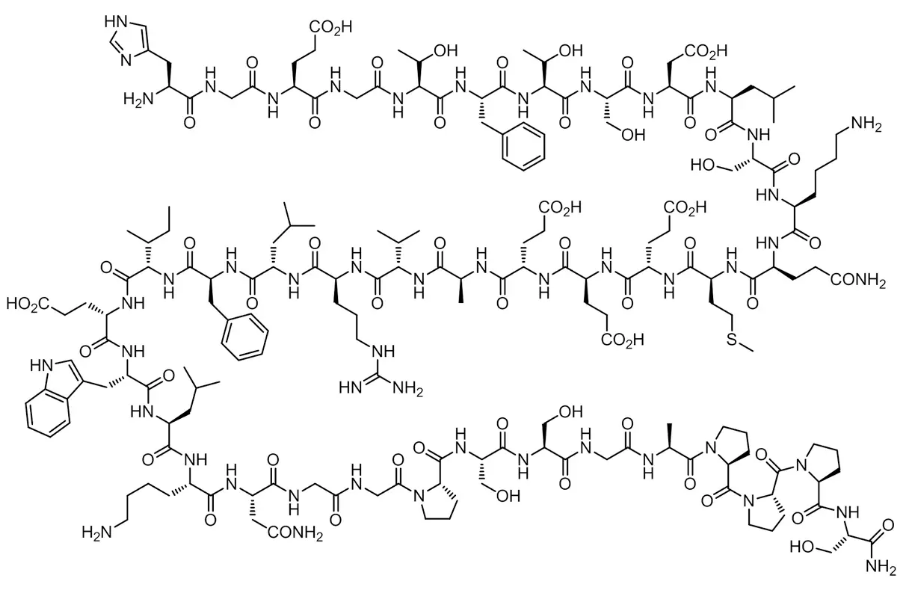
In the study, the researchers analyzed the medical records of 100288 patients with type 2 diabetes from The Health Improvement Network database. The researchers said that patients with type 2 diabetes often faced an increased risk of Parkinson’s disease compared to cohorts who did not have type 2 diabetes. But common therapeutic drugs, GLP-1 agonists and DPP4 inhibitors, do not seem to reverse the increased risk of Parkinson’s disease.
The researchers found that patients who took both GLP-1 agonists and DPP4 inhibitors may seem less likely to be diagnosed with Parkinson’s disease in the next few years (with an average follow-up of 3.3 years) than those who took other diabetes drugs, and those who took GLP-1 agonists were 60 percent less likely to develop Parkinson’s disease. This study further confirms the results of the use of exenatide in patients with Parkinson’s disease in phase 3 clinical trials, and researchers will recruit 200 patients with Parkinson’s disease in the UK for further trials, previous studies have shown that patients with Parkinson’s disease who received weekly injections of exenazeptide for a year may perform better on exercise tests than those who received placebo.
“Our findings enhance the link between type 2 diabetes and Parkinson’s disease.” researcher Foltynie said. Although researchers now know that most people with diabetes do not develop Parkinson’s disease. In addition, the researchers added evidence that the drug exenatide may help prevent or treat Parkinson’s disease by affecting the progression of the disease rather than just reducing the patient’s symptoms. Of course, this may require more clinical trials by scientists at a later stage.
Finally, the researchers say that when giving drugs to patients with type 2 diabetes, clinicians may need to consider other risk factors for Parkinson’s disease, but they need to conduct more studies at a later stage to confirm its clinical value.
References
- Brauer, R., Wei, L., Ma, T., Athauda, D., Girges, C., Vijiaratnam, N., … & Foltynie, T. (2020). Diabetes medications and risk of Parkinson’s disease: a cohort study of patients with diabetes.Brain, 143(10), 3067-3076.
- Cvetković, R. S., & Plosker, G. L. (2007). Exenatide.Drugs, 67(6), 935-954.
]]>
However, several barriers prevent broad application of islet transplantation even within this select patient group. The relatively limited availability of cadaveric pancreata is especially critical, since not every islet isolation attempt currently yields an adequate mass of tissue for transplant. Additionally, more than one islet infusion is often necessary to achieve insulin independence. Genetically modified tissue and alternative sources of insulin secreting tissue (porcine or otherwise) could be longterm solutions to this problem. However, many centers are seeking augmentative therapy to islet transplantation. The ideal candidate would both reduce the amount of islet tissue needed to render and maintain the patient insulin independent and be appropriate for concurrent use with immunosuppressive therapy.
Recent reports, including from a multi-center trial of the Edmonton Protocol, show that graft function declines markedly in transplanted patients with time. This evanescence of islet graft function may be the combined result of allograft rejection, autoimmune diabetes recurrence or islet metabolic burnout. Immunosuppressive agents, although beneficial in preventing islet rejection, may have side effects including diminishing islet function or inducing islet death. Although initial reports suggested that sirolimus, one such immunosuppressive drug, did not have detrimental effect on islet function, several recent investigations have shown that sirolimus has a negative impact on (3-cell function by directly reducing viability, preventing VEGF-mediated angiogenesis, and preventing neogenesis of B-cells from co-transplanted ductal cells.
Glucagon-like peptide 1 (GLP-1) receptor agonists are emerging therapeutic options in the field of type 2 diabetes. GLP-1, an incretin hormone, exerts effects through the specific GLP-1 receptor (GLP-1 R), including stimulation of insulin secretion, suppression of glucagon secretion, slower gastric emptying, and increased satiety. Native GLP-1 administration has limited therapeutic benefit due to its short biological
half-life (several minutes). However, GLP-1 analogues, including exenatide (half-life 60-90 minutes) and liraglutide (half-life 13 hours when administered subcutaneous) are more promising candidates. GLP-1 analogues have recently been discovered to have beneficial effects as adjunct therapy in type 1 diabetes mellitus models, and in pancreatic islet transplant pre-clinical models. Furthermore, some groups have studied these analogues in human islet transplantation which has provided evidence that isolated islets remain responsive to GLP-1 receptor agonists. Liraglutide is an especially attractive candidate for islet transplantation, in addition to its long half-life, it has been reported to maintaining glycemic control in type 2 diabetes with a low risk of hypoglycemia.
However, current literature on the therapeutic role for GLP-1 analogues is limited to observational rather than mechanistic studies in islet transplantation. Furthermore, there is need to understand whether documented functional effects of GLP-1 analogues in islet transplant can circumvent immunosuppressive toxicities on islets, especially those of sirolimus which are of particular concern and have been well described elsewhere.
The article report the investigation of liraglutide in islet transplantation. It investigated both the effect of liraglutide on islet engraftment in the short and long term. Furthermore, it investigated the mechanism of liraglutide action in the setting of islet transplantation. Finally, it sought to investigate the ability of liraglutide to improve islet engraftment in the presence of the immunosuppressive agent sirolimus at clinically relevant blood levels.
Reference:
SHAHEED MERANI. ENGRAFTMENT AND FUNCTION IN PANCREATIC ISLET TRANSPLANTATION
]]>