1. It can inhibit the growth hormone, thyroid stimulating hormone, insulin, and pancreatic glucagon secretion.
2. It can inhibit gastric acid secretion stimulated by the test meal and 5 pentagastrin, as well as the release of gastrin and pepsin.
3. It can significantly reduce the splanchnic blood flow, decline portal pressure, blood pressure and collateral circulation, enabling to reduce the blood flow to the liver.
4. It can reduce the secretion of gallbladder and pancreas, as well as internal and external secretion of stomach small intestine, enabling to reduce the activity of pancreatic cell protection.
5. It can inhibit the secretion of glucagon.
6. It can affect the gastrointestinal absorption and nutritional functions to a certain degree, such as liraglutide.

Indications:
It has been used for esophageal varices bleeding due to portal hypertension; gastrointestinal bleeding caused by peptic ulcer, stress ulcer, and erosive gastritis; the prevention and treatment of acute pancreatitis and its complications; pancreas; adjuvant therapy of pancreas, gall bladder, and intestinal fistula; acromegaly, gastrinoma, insulinoma and vasoactive intestinal peptide tumors.
Consumption Usage:
1. Upper gastrointestinal bleeding, mainly indicating the bleeding of esophageal varices: start by intravenous infusion of 250μg (within 3 to 5 minutes), followed by 250μg/hr infusion, and then it should be administered continuously for 48 to 72 hours after bleeding.
2. Pancreas, gall bladder, and intestinal fistula: start with 250μg/h infusion until the fistula closure, and then it’s the successor with 1 to 3 days.
3. Acute pancreatitis: 250μg/h for continuous 72 to 120 hours; prevention of complications of pancreatic surgery for five days in a row; the row ERCP examination should use the product within 2 to 3 hours before the surgery.
Adverse Reactions:
1. Small number of patients may have vertigo, tinnitus, flushing;
2. Injection of this product faster than 50μg/min will produce nausea and vomiting.
Precautions:
1. Banned from the allergy, as well as pregnant and lactating women.
2. Administration at the beginning might cause a temporary decline in blood sugar, so insulin-dependent diabetics should check the blood sugar every 3 to 4 hours.
3. It can be used to extend the hypnotic effecting time of hexobarbital and the effect might aggravate the role of pentene tetrazole. Thus, the two products cannot be used simultaneously.
4. The product should be administered alone, indicating this product should not be administered in combination with other drugs combined.
5. Arterial bleeding is not a somatostatin indication.
Specification:
Injection: 250μg, 3mg
Modern scientific advances in various diseases have been benefited from high-level peptide products, such as deslorelin acetate, GLP-1 (7-36) amide acetate, teduglutide, and so on. That’s why increasing researchers are focusing on peptide studies!
]]>
1. The best way to preserve serum
We recommend that serum should be stored at -5℃ to -20℃. If you can not run out of a bottle, you should aseptically package the serum into a appropriate sterile container, and then put back into the freezer.
2. How to thaw the serum without damaging the quality of products?
We recommend that you should first dissolve it in the refrigerator (usually at 2-8 ℃) after removing the serum from freezer. Then, it is the whole solution at room temperature. It must be noted that the dissolution process should be dealt regularly.
3. How to deal with the problem after thawing serum with flocculent precipitate?
Serum precipitate occurs for a number of reasons, but the most common reason is due to the degeneration of serum lipoproteins. And fibrin (one protein coagulation) will exist in the serum after the serum is thawing. It is also one of the main causes of serum precipitate. But the flocculent precipitate does not affect the quality of the serum itself. Maybe some other chemical substances require the process too, such as hexapeptide.
If you want to remove the flocculent precipitate you can dispense the serum into a sterile centrifuge tube and centrifuged slightly to 400g; the supernatant can be followed along the inner filter media. We do not recommend you to remove the flocculent precipitate through filtration, because it can clog your filter membrane.
4. What is heat-inactivated process? Is it necessary to do this?
Thawed serum should generally be processed at 56℃ for 30 minutes because this heating step can make the complement lose the activity. In terms of the involved complement reactions, they generally means the release of cytolytic activity, contraction of smooth muscle, mast cells and platelets histamine, enhanced phagocytosis, chemotaxis and activation of lymphocytes and macrophage.
Experiments show that heat-inactivated serum after handled correctly is unnecessary for most of the cells. In addition, processed serum could only slightly promote the cell growth, or absolutely no obvious effect. Sometimes, because the high temperature usually affects the quality of serum, the cell growth rate might decrease apace. In brief, precipitate formation requires more attention.
5. How to avoid sediment?
We recommend you to pay attention to the right thawing steps while using the serum, and try to avoid prolonging the inactivated process of serum or placing serum in high temperature environments.
To be honest, serum operation has been constantly helpful in biotechnological areas, such as cell research and peptide synthesis so that it’s necessary to improve related measurement process. Briefly, biotech has developed rapidly, so it demands sort of overall progress. Serum operation is one of the kind.
]]>
In fact, the correct response is not to run but fall down to the ground, while at the same time using your hands to cover your face because it can protect your face and lungs. If your colleagues’ clothes catch fire and they feel startled, you should tell them not to run and help extinguish the fire. Specifically, combustion is a chemical reaction of a substance ( cubicin ) to be oxidized rapidly, which requires three crucial elements: oxygen, fuel and sufficient temperature. Therefore, in order to extinguish the fire, you had better control at least one of the three. You can prevent oxygen from contacting with fire, remove combustion or lower the temperature. Well, how about the combustion process?
Combustion Process: combustible material in different states can have varying combustion process. Based on participant combustible substances, fire can be divided into four different types.
1. A-type fire could be those substances in the form of fuel ash residue, such as paper, wood, cloth, rubber, and some plastics.
2. B-type fire could be flammable liquids and gases, such as gasoline, kitchen grease, propane, acetylene, copper, etc.
3. C-type fire could be power lines and electricity facilities (motor, computer, control panel). Note that if you cut off the electricity supply facilities, C-type fire can be classified as one of the other three.
4. D-type fire could be unstable metal fire, such as magnesium, sodium, titanium, and some organometallic compounds such as aluminum alkyl and grignard reagent.
Any kind of fire can be included in more than one category. For example, if the fire was caused by paper and grease, it could be A-type and B-type.
In summary, fire precautions should be payed more attention, for the purpose of reducing some unnecessary laboratory incidents. In addition, by doing this a safer lab environment can be realized. Just be more cautious while doing chemical experiments and you will enjoy the great experimental laboratory.
]]>
Taking flammable liquids as the example, they are usually used in biological experiments. Under the action of fuel fire or heat source, flammable liquids first evaporate into steam and then the steam will go through oxidative decomposition, finally it’s the combustion. At the beginning of a slow burn, the flame is not high, because when the surface temperature is low; the evaporation will be low and the amount of vapor might be less. With prolonged experiment combustion, flame heat will transfer to the liquid surface, and previous evaporation rate and flame temperature will increase at the same time when the surface temperature rises. It will reach the level of boiling liquid. Whereas, if you cannot cut off the air, flammable liquids may completely get burned. The lower the flash point of the liquid is, the greater the risk of fire disaster could be.
It’s common to know fire precautions are necessary in biosafety laboratory. Given the fact, how about it’s features?
1. Low Flash Point
Actually, the ignition energy is relatively small (mostly less than 1 millijoule), with a large explosion hazard. Even Mars and hot surface can cause burning, too. Coupled with a lot of flammable liquids’ large electrical resistance or other elements like fetal fibronectin, it’s easy to accumulate static electricity in operation, and the energy is sufficient to cause combustion and explosion. Oxidizer can also burn or explode flammable liquids (such as cyclopentadiene and nitric acid).
2. Low Boiling Point
Generally, most boiling point is less than 100℃, while the vaporization is fast so it will supply flammable vapors steadily. In addition, viscosity of flammable liquids is mostly small, thus high liquidity is very easy to spread around those chemical substances like daptomycin. Therefore, floating on the ground or working table (mostly due to flammable liquid vapors are heavier than air) can increase the risk of burning and explosion risk.
3. Toxicity
Clearly, some chemical substances might be toxic, and that’s why researchers should pay more attention to biosafety laboratory. While conducting biological or chemical experiments, necessary protective measures for preventing toxicity are absolutely necessary.
One more point should be stressed here, that is, important ways to extinguish the fire. For flash point below 65℃ and lighter than water, you shouldn’t dissolve it in water, it could be done primarily by dry powder, carbon dioxide, and other types of fire extinguishing agents. While as for fire-soluble and non-soluble flammable liquids, they might be realized with dry powder. Anyway, biosafety laboratory requires enough concerns because it’s the only way to create a great laboratory environment.
]]>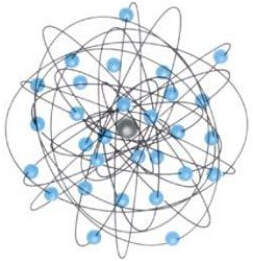 In 1947, a symposium has been convened, aiming at discussing practical application of isotope in biology and medicine, which began a new era of tracer technology applications on stable isotope. In recent years, tracer technology on stable isotope has developed rapidly and made great achievements; segregation analysis has also made great breakthrough. While as for the fundamental basis of tracer method on stable isotope, several principles should be payed attention. The first one is that the isotopic composition of an element in nature is relatively constant. And the second one is that isotopes of the same element have the same chemical properties.
Certainly, some quality differences between the isotopes might affect the same element. In addition, due to the difference of isotopes’ quality, their physical and chemical properties will be varying as well. Thus, when in experiments, it’s necessary to place more concerns on the istope effect like copaxone. Scientists have indicated a fact that tracer method on stable isotope has its own special features:
1. No radiation, no radiation effects and adverse effects.
2. Keep safety and no harm to people.
3. Without pollution and not subject to environmental conditions.
4. No decay and test time is not limited.
5. Experiment that radiotracer method is difficult to carry out can be conducted
So, how about the basic procedure of isotope analysis? Is it easy to understand? Actually, it’s easy to conduct. First, isotope should be introduced into the organisms and then the original sample of flora and fauna should be prepared, as well as the samples that instrument requires. After that, it is the analysis process, which enables researchers to take record and analyze the experiment results.
In summary, the basic principles of isotope requires enough attention, such as the experiment materials, the precision of analysis technology, the distribution of various elements, and the like. In addition, researchers must focus more on the samples to be detected because different mass ion stream might affect the relative flow. Well, maybe the principles could be more refined in certain particular aspects in the future.
]]> In order to prevent the occurrence of side reactions, it is necessary to protect the side chains of amino acids that participate in the reaction. The carboxy terminus is free, and must be activated before the reaction. To be more specific, two main methods of solid phase synthesis are used in applications, namely Fmoc and tBoc. And because Fmoc owns more advantages than tBoc, now researchers mostly utilize Fmoc synthesis. When it comes to specific synthesis cycle, it mainly consists of the following components:
1. Protection: protective pillars and monomers must remove the amino group’s protection gene by using an alkaline solution (piperidine).
2. Activation and crosslinking: carboxyl group of next amino acid is activated by an activating agent. Activated monomer connecting with the free amino crosslinking can form a peptide bond. In this step, a large number of super-concentration reagents that can drive the reaction effectively are indispensable. As for the cycle, it means it’s a two-step reaction cycle, which should keep repeating until the synthesis is completed.
3. Elution and deprotection: peptides elute from the column, and the protecting group is eluted and deprotected by a deprotecting agent (TFA).
Actually, during the process of polypeptide synthesis, ammonium lactate, bradykinin, C peptide and some other substances might be stressed more. In addition, the synthesis is connected with the selection of resin and fixation of amino acids. It’s common to know the most important feature of distinguishing solid phase synthesis and other techniques is solid support, because synthesis carrier that can be used for solid phase peptide must meet the following requirements: containing reactive sites, owning physically and chemically stable condition, allowing rapid and unimpeded contact between the growing peptide chain and reagents, and providing enough connection points. Therefore, each unit volume of the carrier can give a useful yield of peptides and the need to minimize the interaction of the polypeptide chains by carrier bound will be realized.
There are mainly three types can be widely used for solid phase synthesis: polystyrene-divinyl benzene crosslinked resins, polyacrylamide, and polyethylene-glycol based resins and derivatives. In terms of different reactive groups, the stability of amino acids could be varying, because the stability is realized by protecting carboxyl of amino acids and the reaction groups of resin. In summary, polypeptide synthesis is able to promote the stability of amino acids by protecting the covalent and certain other substances like amide bound.
]]> 1.Generally, peptides that contain less than five amino acids are soluble in aqueous solutions, but strong hydrophobic amino acids could be the exception.
2.If the charged amno acids are in the average distribution of entire sequence, then those hydrophilic peptides that contain >25% of charged amino acids (E, D, K, R, H) and some peptides that contain <25% of hydrophobic amino acids can both be dissolved in an aqueous solution. Specifically, the purification system of polypeptides is generally regular, compared with other kinds of peptides. In addition, if the peptides were dissolved in the buffer with weak or no buffering capacity, such experiment could result in acidic peptide solution. Based on the fact, you should try to make sure that the pH value of solvent is nearly neutral while using other methods to dissolve peptides.
3.It is much better for you to dissolve peptides into the smallest amount of strong solvents like DMF and ACN. On the other hand, in terms of those similar organic solvents, it’s better to dissolve the peptides by slowly adding the aqueous solution. Furthermore, if the solution becomes cloudy, it might because it has reached the solubility limit, which means the continuous dissolution is sort of useless. It should be noted that the chosen solvent should be compatible with the experiment system when you begin the experiment.
4. The hydrophobic amino acids that contain > 75% of highly hydrophobic peptides are generally not soluble in aqueous solutions. Thus, such peptides should first use strong solvent like TFA to conduct dissolution process. The final peptide solution may require a high concentration of organic solvent to realize denaturation, but organic solvents are generally not used for biological function research of living cells.
5. Some polypeptide sequences can easily form intramolecular hydrogen bonds among the redundant networks, and are also easy to form gel in the aqueous solution. Such peptides can be dissolved by following the third step.
What’s the most important is that peptide experiment should be payed more attention. To reduce the possible problems during the dissolution, it’s recommended that more considerations should be based on the design and sequence, in order to improve the solubility of peptides.
]]> 1. Acid Process
Technically, acid process means obtaining peptides by catalyzing proteins with chemical acids. Different from electrical method that has low cost in production, acid process can be regarded as a large investment, because it covers a complex procedure. It is a little difficult to control the molecular weight and might produce some chemical residues, which makes it hard to form a functional platform. Based on the fact, it’s very difficult to achieve industrial production.
2. Microbial Fermentation Process
Generally speaking, current production technology of microbial fermentation process mainly makes use of modern microbial fermentation technology, transforming macromolecular immunoglobulin into small peptides by controlling microbial metabolism and fermentation conditions. In this way, peptides with a different amino acid sequencing and molecular weight could be produced. In addition, during the fermentation process, those produced free amino acids will be absorbed and used by microorganisms and won’t produce feedback resistance against microbial metabolism.
Actually, in terms of microbial metabolism, it can transport and rearrange the amino acids and small peptides, trying to modify and recombine some certain peptides. For example, soybean peptides that use soybean meal as the raw material can be produced through microbial fermentation process; such peptides changes the inherent soy protein of amino acid sequence, which modifies peptides’ hydrophobic amino terminus. Thus, the soybean peptides can have a higher activity without bitterness, which at the same time gives soybean peptides some biological activity functions.
3. Enzymatic Process
Enzymatic process generally uses enzymes to catalyze proteins, which has realized breakthrough and innovation on the basis of traditional methods, adapting to the low-carbon economy and environmental protection requirements. It is useful in peptides synthesis as well. Compared with other methods, this unique process is simpler and requires less investment, which makes it suitable for industrial production. In addition, enzymatic process enables peptides strong activity and diverse biological functions.
In sum, experimental methods of peptides belong to the high-tech biological engineering fields, which have been widely used in pharmaceutical industry. Given the fact, such issues require more concerns. Thus, maybe peptides can have a wide range of uses and broad development prospects.
]]>