
Diabetes mellitus (DM) is a group of metabolic diseases classified by chronic hyperglycemia resulting from defects in insulin secretion, insulin action, or both. Diabetes is prevalent worldwide and the number of patients is drastically rising, with a predication of 366 million in 2030 due to factors such as obesity, inactivity, aging, and hormonal disorders. While there are many available treatment regimens for type 2 diabetes, some of the older therapies can cause undesirable adverse events, including hypoglycemia, hunger and weight gain. The latter is particularly problematic as insulin resistance is strongly correlated with obesity. Some other related metabolic complications include cardiovascular disease and dyslipidemia, all resulting in an increased risk of mortality.
Introduction of GLP-1
GLP-1 is a gastrointestinal peptide that stimulates glucose-dependent insulin release from pancreatic islets, slows gastric emptying time, inhibits inappropriate post-meal glucagon release, and ultimately reduces food intake. GLP-1 actions are mediated via the high affinity GLP-1 receptor. Impaired secretion of GLP-1 can contribute to type 2 diabetes. GLP-1 also induces satiety, resulting in lower voluntary caloric intake. These mechanisms together allow for significant blood glucose control and meaningful weight loss.
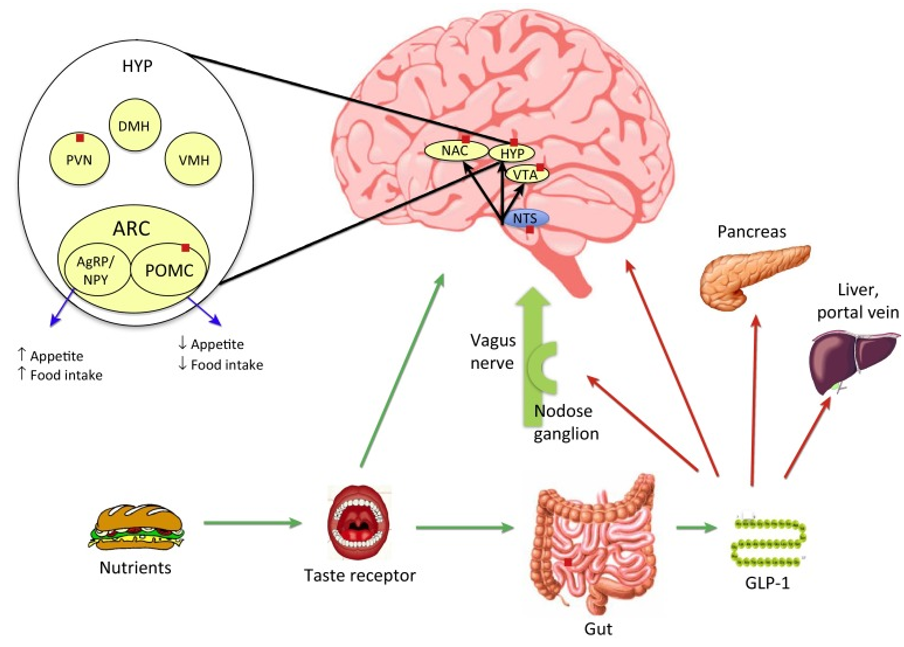
The advantages of GLP-1 drugs
Insulin therapy has a high risk of hypoglycemia, while GLP-1 is hypoglycemic in the form of glucose dependence, so the risk of hypoglycemia is extremely low. Most patients with type 2 diabetes are obese, and further weight gain associated with insulin injection can exacerbate metabolic disorders and diabetes-related complications (including microvascular and macrovascular complications). The weight loss effect of GLP-1 drug therapy is very beneficial to patients with diabetes. More importantly, its cardiovascular benefits provide excellent clinical compliance for long-term GLP-1 treatment.
The challenge of GLP-1 drugs
Compared with insulin, GLP-1 has a unique biological function, and its hypoglycemic effect can be changed according to the change of blood glucose level. Therefore, even by oral administration, the lack of pharmacokinetics of GLP-1 is no longer a major challenge compared with insulin. However, since patients with type 2 diabetes often need to take multiple drugs at the same time, the main challenges facing oral GLP-1 drugs are feeding and the potential dangers of drug-drug interactions. The ultimate success of oral peptides or recombinant protein drugs requires a large number of clinical studies and verification by real-world patients after launch. In addition, due to the very low bioavailability of oral preparations, an injection dose of more than 10 to 100 times is usually required. Its production cost and price are also key to determining whether the drug can be used by American insurers and the European health care system.
Conclusion
As GLP-1 drugs enter the ADA-EASD guidelines as first-line drugs for type 2 diabetes, there will be a great market demand for GLP-1 drugs. Long-acting human GLP-1 drugs have insulin-similar hypoglycemic effects. Not only extremely low risk of hypoglycemia, its weight loss and cardiovascular benefits will alleviate the long-term type 2 diabetic patients whom needs lifelong treatment. Factors such as patient self-care, the occurrence of complications, and the pressure to bear the cost of drug treatment over a long period of time will also play a part to impact the treatment outcome for patients.
In conclusion, the market needs diabetes drugs that are high-quality, low-cost, affordable, and have multiple effects to improve patients’ metabolic syndrome and quality of life. Long-acting human GLP-1 drugs will be the main force in the diabetes market in the future.
References
1. Kristensen, S. L., Rørth, R., Jhund, P. S., Docherty, K. F., Sattar, N., Preiss, D., … & McMurray, J. J. (2019). Cardiovascular, mortality, and kidney outcomes with GLP-1 receptor agonists in patients with type 2 diabetes: a systematic review and meta-analysis of cardiovascular outcome trials. The Lancet Diabetes & Endocrinology.
2. Hirsch, I. B. (2019). The Future of the GLP-1 Receptor Agonists. Jama, 321(15), 1457-1458.
]]>
Introduction of Semaglutide
As an analog of natural human glucagon-like peptide-1 (GLP-1), Semaglutide can stimulate insulin production in a glucose-dependent manner, inhibit glucagon secretion, and reduce appetite and food intake. It has shown good results in a series of clinical trials in the past. Compared with Liraglutide, Semaglutide has a longer fat chain and higher hydrophobicity, but Semaglutide is modified by short chain PEG and its hydrophilicity is greatly enhanced. PEG modification can not only bind closely to albumin, cover up the hydrolysis site of DPP-4 enzyme, but also reduce renal excretion, prolong the biological half-life and achieve the effect of long circulation.
The mechanism of action.
Semaglutide is a glucagon-like peptide-1 receptor agonist. It increases insulin production, a hormone that lowers blood sugar levels. It also seems to promote the growth of beta cells in the pancreas, where insulin is produced. On the other hand, it suppresses glucagon, which increases blood sugar. It also reduces food intake by reducing appetite and slows digestion in the stomach. In this way, it plays a role in reducing body fat.
Clinical trials
The data released were from clinical trials of PIONEER 2 and PIONEER 4, respectively. In the first trial, the glycosylated hemoglobin (A1C) level was significantly lower than that of the control drug empagliflozin (25 mg), oral Semaglutide (14 mg) at 26 weeks, with the data of 0.9% and 1.3%, respectively (p < 0.0001). This has also reached its main clinical end point. At the secondary clinical end point A1C levels were also significantly decreased in patients who took Semaglutide orally at 52 weeks. There was no significant difference in weight loss between the two.
In the PIONEER 4 clinical trial, oral Semaglutide (14 mg) achieved non-inferiority in A1C levels compared with Victoza at the 26th week. Compared with placebo, the A1C level decreased significantly. At the secondary clinical end point, the effect of A1C was better than that of Victoza and placebo at 52 weeks. In terms of weight loss, oral Semaglutide was superior to Victoza and placebo at 26 and 52 weeks. At 52 weeks this effect was statistically significant. Specifically, oral Semaglutide lost 4.3kg, which was 3.0kg and 1.0kg in the Victoza and placebo groups, respectively.
Future
“Although its safety and efficacy have been proven, GLP-1 receptor agonists have not been fully used in clinical practice,” said Dr. Ildiko Lingvay, who led the two studies. “As a doctor, I am heartened by these results. Oral Semaglutide has the potential to be the first oral GLP-1 receptor agonist in patients with T2DM. ”
References
- Marso, S. P., Bain, S. C., Consoli, A., Eliaschewitz, F. G., Jódar, E., Leiter, L. A., … & Woo, V. (2016). Semaglutide and cardiovascular outcomes in patients with type 2 diabetes. New England Journal of Medicine, 375(19), 1834-1844.
- Husain, M., Birkenfeld, A. L., Donsmark, M., Dungan, K., Eliaschewitz, F. G., Franco, D. R., … & Tack, C. J. (2019). Oral Semaglutide and Cardiovascular Outcomes in Patients with Type 2 Diabetes. The New England journal of medicine.
According to a study report published in the international journal Science Translational Medicine, scientists from Sweden, the United States and Switzerland found that sulforaphane contained in cruciferous vegetables could reduce glucose levels. In addition, this article highlighted how to separate sulforaphane and how to make use of sulforaphane to examine its influence on rats’ live cells and human bodies.
For many years, we have constantly heard of “type 2 diabetes”, which is closely related to the increase of obesity population in many countries, especially in America. In previous studies, researchers found when the body cannot effectively use glucose, cells are unable to use insulin properly, which can further cause health problems. Currently, treatments of type 1 diabetes include eating healthy food and taking drugs such as metformin. However, 15% of people cannot be treated with these existing drugs, because they pose a risk for liver injury.
Type 2 diabetes usually develops among people in their middle ages, especially among overweight population. At that point, their body will stop responding to insulin, a substance which can control glucose levels. High level of blood sugar resulted by abnormal insulin regulation will increase the risks of sudden heart disease, blindness, nephropathy, and so on.
A chemical called sulforaphane found in Broccoli Sprouts has previously been shown to have the effect of lowering diabetic rats’ blood glucose levels. Anders Rosengren and his colleagues at the University of Gothenburg in Sweden, want to find out if this also works in humans. To test this theory, they had 97 patients with type 2 diabetes treated with concentrated doses of sulforaphane or placebo for three consecutive months. Only three of them continued to take metformin. Subjects who did not take metformin could also relatively keep their glucose levels well.
Sulforaphane in concentrated dose is about 100 times that in broccoli in nature. Taking the concentration is the same as having 5 kilograms of broccoli a day, Rosengren said.
On average, compared to subjects who were given placebo, the glucose levels of those who took sulforaphane reduced by 10%. The effect of these extracts was most effective among obese subjects who had “dysregulated” diabetes. At the beginning, these people’s basal blood glucose levels were comparably high.
“We are extremely excited about the effect of our new findings, and we are eager to bring these extracts to our patients,” Rosengren said, “as we can see, their average glucose level has lowered by around 10%, which is enough to relieve symptoms in their eyes, kidneys and blood. ”
Further research showed that both metformin and sulforaphane can reduce blood sugar, but their mechanism is different. Metformin makes cells more sensitive to insulin so that they can sponge more sugar in the blood. As for sulforaphane, it lowers glucose levels through inhibiting liver enzymes, a substance which can stimulate glucose production.
Therefore, Rosengren believes that broccoli extract is a useful complementary to metformin, rather than a competitor. He pointed out that many patients with diabetes cannot take metformin because of kidney syndrome, so in this case, broccoli can be a potential alternative.