Novel coronavirus (COVID-19) is known to cause acute respiratory distress syndrome (ARDS), which causes about 50 percent of ARDS deaths despite intensive care and mechanical ventilation. Therefore, patients with coronavirus infection who develop ARDS are at a particularly high risk. Professor Javitt said: “After carefully reviewing the preclinical and clinical data submitted to FDA for IND and orphan drug certification for Aviptadil, we believe that Aviptadil may be a safe and effective ARDS treatment in general, especially for ARDS caused by COVID-19. Due to the rapid expansion of the epidemic and unusual unmet medical needs, we are prepared to start clinical trials as soon as possible so that potentially life-saving treatments can be brought to market as soon as possible. ”
Acute respiratory distress syndrome (ARDS) is a type of respiratory failure characterized by rapid development of diffuse inflammation in the lungs. Symptoms include shortness of breath, shortness of breath and skin cyanosis. A decline in the quality of life is relatively common among survivors. Causes may include viral infection, sepsis, pancreatitis, trauma, pneumonia and inhalation. The underlying mechanism involves diffuse cellular injury, the formation of microscopic balloon barriers in the lungs, dysfunction of surfactant, activation of the immune system and dysfunction in the regulation of blood coagulation. In fact, ARDS can impair the lung’s ability to exchange oxygen and carbon dioxide. The primary treatment includes mechanical ventilation, combined with treatment for the underlying etiology. Ventilation strategies include low flow and low pressure. If oxygenation is still insufficient, alveolar stretching and neuromuscular blockers can be used. The mortality rate of the syndrome ranges from 35% to 50%. Worldwide, ARDS affects more than 3 million people every year.
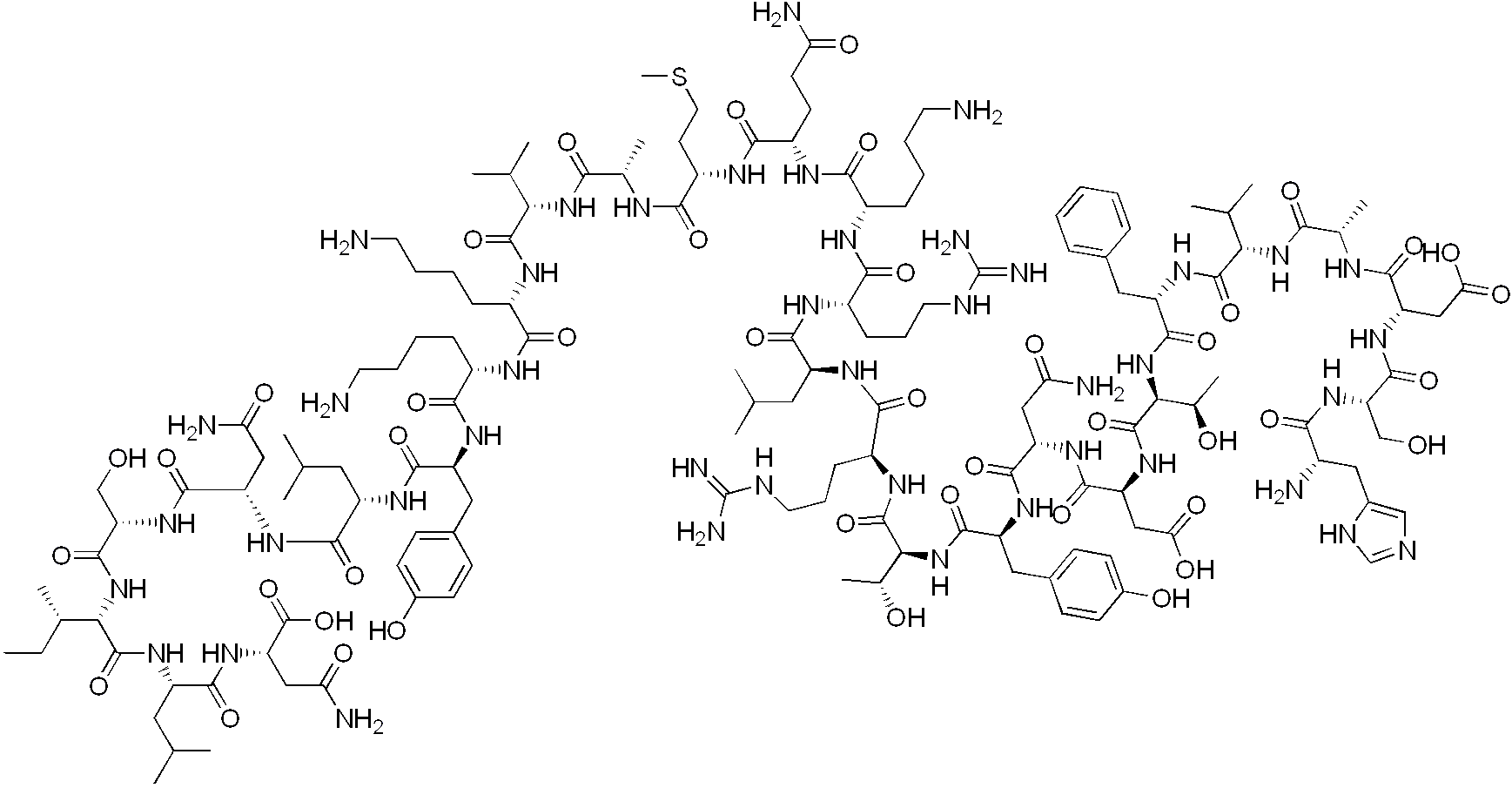
Aviptadil is a patented dosage form of vasoactive intestinal polypeptide (VIP). VIP was originally developed as a combination of phentolamine and is now sold in Europe for the treatment of erectile dysfunction. It is known that VIP is highly concentrated in the lung and can inhibit a variety of inflammatory cytokines. In 2001, Aviptadil was certified by American FDA Orphan Drug for the treatment of acute respiratory distress syndrome, and in 2005, it was certified for the treatment of pulmonary hypertension. Aviptadil was certified as an orphan drug by the European Drug Administration in 2006 for the treatment of acute lung injury and in 2007 for the treatment of sarcoidosis. Both FDA and EMEA in the United States have issued licenses for new drugs under development in Aviptadil Phase 2 human trials. The University of Freiburg in Germany is currently conducting a clinical study to evaluate the effectiveness of Aviptadil in patients with pulmonary sarcoidosis.
A large number of animal studies have shown that Aviptadil may reduce pulmonary inflammation in a variety of models and edema. Human phase 1b/2 studies (involving a total of 76 patients) have shown that Aviptadil has the potential to relieve bronchospasm, reduce pulmonary hypertension and treat other features of pulmonary inflammation in some cases, including a significant reduction of alpha pro-inflammatory cytokine tumor necrosis factor (TNF–α). Among them, a phase 2 preliminary trial of Aviptadil in 8 ARDS patients showed excellent safety and encouraging signals of potential efficacy.
References
- Jahangir, M. A., Muheem, A., & Rizvi, M. F. Coronavirus (COVID-19): History, Current Knowledge and Pipeline Medications. Int J Pharm Pharmacol 2020; 4: 140. doi: 10.31531/2581, 3080(2).
- Keshavarz, A., Kadry, H., Alobaida, A., & Ahsan, F. (2020). Newer approaches and novel drugs for inhalational therapy for pulmonary arterial hypertension. Expert Opinion on Drug Delivery, 1-23.
- Sommer, N., Ghofrani, A., Pak, O., Bonnet, S., Provencher, S., Sitbon, O., … & Kiely, D. G. (2020). Current and future treatments of pulmonary arterial hypertension. British Journal of Pharmacology.
]]>
PNAs are synthetic DNA analogs in which the phosphodiester backbone is replaced by repetitive units of N-(2-aminoethyl) glycine to which the purine and pyrimidine bases are attached via a methyl carbonyl linker (Figure. 1). The PNA molecules can routinely be labelled with biotin or various fluorophores. The unique chemical makeup provides PNA with unique hybridization characteristics. Unlike DNA and RNA, the PNA backbone is not charged. Consequently, there is no electrostatic repulsion when PNA hybridizes to its target nucleic acid sequence, giving a higher stability to the PNA-DNA or PNA-RNA duplexes than the natural homo- or heteroduplexes. This greater stability results in higher thermal melting temperature (Tm) values than is observed for DNA-DNA or DNA-RNA duplexes. An additional consequence of the polyamide backbone is that PNAs hybridize virtually independently of the salt concentration. Thus, the Tm of PNA-DNA duplex is barely affected by low ionic strength. This significantly facilitates the hybridization with the PNAs. The unnatural backbone of PNAs also means that PNAs are particularly resistant to protease and nuclease degradation. Because of this resistance to the enzyme degradation, the lifetime of PNAs is extended both in vivo and in vitro. Also, PNAs are not recognized by polymerases and therefore cannot be directly used as primers or be copied.

Figure 1
Applications of PNAs
The artificially synthesized biopolymer PNA is a powerful biomolecular tool in the molecular genetic diagnostics with a wide range of vital applications. Due to the ability to interact with the selected target with large sequence specificity in a gene sequence, PNAs are of great interest in wide range of applications in medicinal and biotechnological areas. They are highly promising in the expansion of gene therapeutic agents, diagnostic and molecular tools for genetic analysis. It was also indicated by in vitro studies that PNAs could inhibit both transcription and translation of genes to which they have been targeted which guarantee their use as antigene and antisense agents.
Antigene Agents
PNA molecules were first used in antigene and antisense assays. Several in vitro studies demonstrated the ability of PNAs to inhibit both eukaryotic translation and transcription. PNA-mediated inhibition of gene transcription is mainly due to the formation of strand-invaded complexes or strand displacement in DNA targets. PNA targeted against the promoter region of a gene can form stable PNA–DNA complexes that restrict the DNA access of the polymerase, whereas PNA complexes located far from the promoter can block the polymerase progression and lead to the production of truncated RNA transcripts.
Antisense Agents
1.Antibacterial agents and Antibiotics
One of the serious problem which is emerging at an alarming rate is the increasing multidrug resistant bacteria. These bacterial pathogens exhibit resistance towards conventional antibiotics due to excessive use of these antibiotics and resistance genes transfer within the bacteria. Researchers desperately require new antibacterial drugs for the treatment of patients infected with drug resistant bacteria. Antisense PNAs as antibacterial agents were found to treat infections caused by multidrug resistant bacteria.
2.Antiviral agents
PRF-1 signal is responsible for synthesizing RNA replicase polyproteins in virus for genome replication, especially for severe acute respiratory syndrome coronavirus replication. Lee et al. evaluated the potential antiviral effect of APNAs with RNA sequence on the PRF-1 signal as target.
PNA Probes in Polymerase Chain Reaction (PCR)
In medical and biological research laboratories, polymerase chain reaction (PCR) is a frequent technique to amplify a DNA target sequence, generating thousands of copies for a variety of biomedical applications. PNA-mediated PCR clamping was also used for the amplification and consequently identification of minor allele in blood chimerism whereas direct sequencing of ordinary PCR product could not identify it.
Use of PNA probes in Fluorescence In Situ Hybridization (PNA-FISH)
Techniques like PNA-FISH are used for the specific and selective identification of S. aureus. PNA-FISH methodology was also used for the diagnosis of bacterial vaginosis which is a common vaginal infection. The method was found to be time saving, highly specific and provided a valuable and trustful diagnostic tool. PNA-FISH was found to be useful for the detection of pathogenic oomycete Aphanomyces invadans which is responsible for ulcerative mycosis, a skin disease caused by a fungus-like agent of wild and cultured fish. In another study, PNA probe-FISH assay was used for detecting mycobacteria with great specificity and sensitivity which helps in the fast and effective treatment of tuberculosis.
PNA based Biosensors
During past few decades, biosensor technology has gained considerable attention in playing a significant analytical role in different industrial and academic applications especially in certain areas like medical, environmental, food, quarantine control, safety, security, as well as defense. Singh et al. reviewed the use of PNA based biosensors that provide rapid, selective, sensitive, cost effective, simple, and precise detection of DNA hybridization. These biosensors are quite functional in perceiving targeted genes which are responsible for particular disease.
PNA/DNA hybridization with Nanoparticles
Colorimetric assay is another important method of DNA detection which is based on the aggregation of unmodified metallic nanoparticles. In this hybridization based method, charged neutral PNA were used as a “coagulant” of citrate anion-coated particles and the assay was validated using gold (Au) and silver (Ag) nanoparticles (NPs). It was found that for discriminating single-base-mismatch, the Ag NPs possess greater sensitivity than Au NPs, further improving the accuracy of result with the use of the multiple aggregation signatures from the two types of nanoparticles. SPR imaging enhanced by ultrasensitive nanoparticles also uses PNA probes for detecting single-nucleotide mismatches in DNA sequences with greater selectivity.
References:
Paulasova, P., & Pellestor, F. (2004, October). The peptide nucleic acids (PNAs): a new generation of probes for genetic and cytogenetic analyses. In Annales de genetique (Vol. 47, No. 4, pp. 349-358). Elsevier Masson.
Gupta, A., Mishra, A., & Puri, N. (2017). Peptide nucleic acids: advanced tools for biomedical applications. Journal of biotechnology, 259, 148-159.
]]>