Peptides are a class of compounds formed by linking multiple amino acids through amide bonds, and their molecular size is between small molecule chemical drugs and macromolecular biological drugs. Compared with small molecule chemical drugs, peptides have higher efficacy, selectivity and specificity, and lower metabolic toxicity. Compared with macromolecular biological drugs, peptides have lower immunogenicity and can penetrate deeper into the target, and continuous production costs are lower. Based on these unique advantages, in recent years, peptide drugs have attracted more and more attention. According to statistics, the growth rate of the peptide drug market is twice that of other drugs. At present, a variety of peptide drugs have entered the market for the treatment of diabetes, osteoporosis, cancer, multiple sclerosis, chronic pain, HIV infection and many other diseases.
As we know, active peptides are the material basis for drug efficacy, so in the development process of peptide drugs, the quality control of active peptides (API) is very important, and the control of peptide-related impurities is an important work of quality control, impurities not only affect the quality and safety of clinical trial samples, in the early stage of drug discovery, These impurities may also affect the judgment of drug efficacy, and inadequate research on impurities may even lead to incorrect conclusions.
Classification of Impurities and Ways of Production
- Impurities related to the synthesis process
Chemical synthesis technology is the gold standard for peptide production. The process was initially carried out in solution, and later solid-phase peptide synthesis was introduced. After decades of continuous development, the technology has become very mature. The steps of chemically synthesizing the polypeptide include: hanging resin-deprotection group-activation and cross-linking-peptide cleavage. In this process, the steps of deprotection, activation and cross-linking are prone to impurities, which are usually points that require quality control.
Missing peptide: As the name suggests, a missing peptide is a peptide that is missing one or more of the required amino acids, and the transient protective group of amino acids that is not completely removed, insufficient activation of the amino acid to be bound, or low cross-linking efficiency can lead to the production of the missing peptide. The identification method of the missing peptide, that is, the mass difference between the impurity and the target peptide observed in the mass spectrometry is the molecular weight of the missing amino acid minus water.
Insertional peptide: During the cross-linking process of synthetic peptides, amino acids are usually fed in excess. If the excess amino acids are not fully washed or the reaction time is too long, the amino acids will be cross-linked again to generate insertion peptides. For the identification method of the inserted peptide, the mass difference between the impurity observed in the mass spectrum and the target peptide is the molecular weight of the inserted amino acid minus water.
Misfolded peptide: It can arise when both amino acid deletions and amino acid insertions occur during a solid-phase reaction process.
Covalently attached peptide impurities: After solid phase synthesis, incomplete removal of permanent protective groups will lead to covalent attachment of protective groups to the peptide sequence, resulting in covalent attached peptide impurities. For the identification method of such impurities, if the molecular weight of the impurity in the mass spectrum differs from the molecular weight of the target peptide by 56 Da, then the attached protective group is the tBu protective group, if the molecular weight of the impurity in the mass spectrum differs from the molecular weight of the target peptide by 100 Da, then the attached protective group is the tBoc-TCS protective group.
- Degradation related impurities
Degradation related impurities include impurities formed by degradation mechanisms during manufacturing and impurities formed by degradation mechanisms during storage. The factors that cause the instability of peptide include oxidation, light, high temperature, pH, ionic strength change and adsorption, etc. The amino acid type and the position of amino acid in the peptide chain have important effects on the stability of peptide.
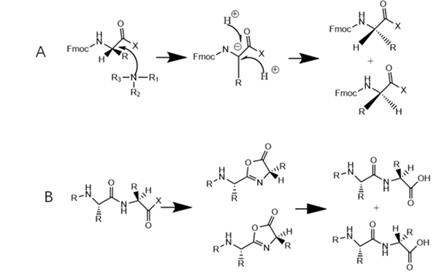
Epipeptide: it refers to the impurity formed by amino acid residues with one or more unexpected chiral configurations in the sequence, which may be derived from optical isomers in the starting materials, or amino acids during the synthesis by enolization or azalactonization of the chiral center. The chromatographic behavior of epi-peptide impurities is very close to that of the main component, and the molecular weight is also the same as that of the main component, so separation and identification are more difficult. Deuterated reagents can be used to hydrolyze and derivatize peptides, and the amino acids that are prone to racemization in the peptide chain can be judged by the content of chiral isomers of amino acids obtained from hydrolysis, and possible epimer peptides can be prepared by directional preparation. targeted research.
Broken peptide: Peptide bonds may be broken when peptide encounter high temperature or pH changes, resulting in broken peptides. Studies have shown that alkaline conditions are most likely to cause peptide bond breaks. The identification of the broken peptide is relatively simple, and which amide bond is broken can be inferred from the molecular weight difference between the impurity and the parent peptide.
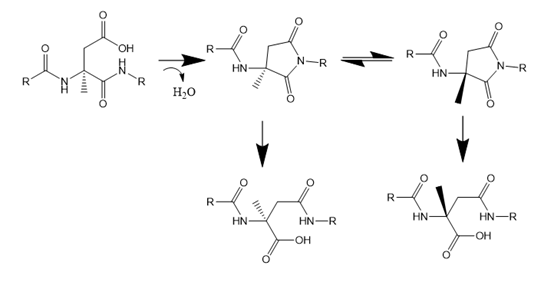
Deamidation impurities: When the peptide contains glutamine or aspartate residues, the amide bond may be removed to form glutamic acid or aspartate residues, which can be formed by two mechanisms, one is direct hydrolysis (easy to occur at pH<5), and the other is through β transformation (easy to occur under alkaline conditions), which attacks the carbonyl group on the side chain through the N atom of the amide bond in the main chain. Form a succinimide ring (a type of azalactone), which hydrolyzes under alkaline or neutral conditions to form a carboxyl group. The succinimide hydrolysis process is often accompanied by two side reactions, namely isomerization and racemization, and finally form four isomers with the same molecular weight. The identification of deamidation impurities is mainly through mass spectrometry, and the impurities detected with molecular weight +1 Da are usually deamidation impurities.
Isomerized impurity: Aspartic acid is an amino acid that is prone to isomerization. Aspartic acid is easily cyclized to the main chain due to dehydration or ammonia in the side chain to form succinimide. Succinimide has poor stability and is easy to hydrolyze. In the process of ring opening, isomers can be formed, and epi-peptide by-products can also be produced at the same time, and its formation mechanism is similar to that of asparagine deamidation.
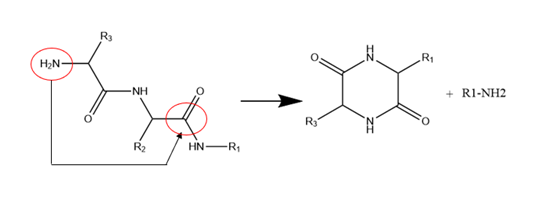
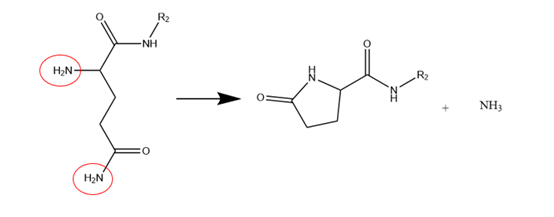
Diazinoperone and pyroglutamate: Diazinoperone refers to the N-terminal active group (usually an amino group) attacking the carbonyl group of the amide bond in the β-site main chain to form diketopiperazine analogens, resulting in a missing peptide with two amino acids, and the reaction is more likely to occur when the N-terminal amino acid hindrance is small. Pyroglutamic acid refers to the N-terminal containing glutamic acid which is cyclized to form pyrrolidone carboxylic acid. The impurity can be identified by mass spectrometry with a molecular weight of 17Da less than the parent peptide (NH3 removed).
Polymer: Intermolecular aggregation and self-association of peptides can lead to the formation of high molecular weight impurities known as polymers. There are two types of polymerization mechanisms: covalent and non-covalent. Non-covalent polymerization is formed by electrostatic or hydrophobic interaction, which is an intermediate state. When the solution concentration, pH or ionic strength changes, this force is easily weakened or disappears, and the polymerization state returns to the monomer state. when the peptide chain contains thiol or tyrosine, it can cause covalent polymerization through the formation of disulfide bonds or the formation of dityrosine. Covalent polymerization is a stable polymerization state that does not change with peptide concentration or pH, ionic strength, etc. Due to the further increase of molecular weight and volume of polymer impurities, it is easy to increase the immunogenicity and cause allergic reaction, so the content of polymer should be controlled reasonably. Polymers are usually detected by volumetric exclusion chromatography, which can be used in conjunction with mass spectrometry to determine the multiple of their polymers.
Oxidative impurities: Oxidative impurities are formed when peptides are exposed to oxygen and light during storage. Amino acids that are prone to oxidation include sulfo-containing amino acids, histidine, tyrosine, and tryptophan.
Peptide-related impurities are not only a problem that needs continuous attention in the GMP supervision during the drug development and production process, but also may cause misjudgment of developers in the early stage of drug discovery and development because of the antagonism of impurities or the super potency of the drug. Therefore, it is usually recommended to use peptides from different sources for retesting when carrying out biological tests to eliminate the influence of impurities on the drug efficacy.
References
- Muttenthaler M, King GF, Adams DJ, Alewood PF, Trends in peptide drug discovery. Nat Rev Drug Discov 20:309-325.
- V.Sanz-Nebot, I.Toro, Investigation of synthetic peptide hormones by liquid chromatography coupled to pneumatically assisted electrospray ionization msaa spectrometry:analysis of a synthesis crude of peptide triptorelin, Rapid Commun. Mass Spectrom,2001;15:1031-1039.
- Matthias D’Hondt, Nathalie Bracke, Related impurities in peptide medicines, Journal of Pharmaceutical and Biomedical Analysis 101 (2014) 2–30.
- Shikha Patel, Vivek K. Vyas, Priti J. Mehta, A Review on Forced Degradation Strategies to Establish the Stability of Therapeutic Peptide Formulation, International Journal of Peptide Research and Therapeutics (2023) 29:22.
- Brian Gregg,Aleksander Swietlow,Control Strategies for Synthetic Therapeutic Peptide APIs Part III: Manufacturing Process Considerations.
- Virender K. Sharma a& Nigel J.D. Graham , Oxidation of Amino Acids, Peptides and Proteins by Ozone: A Review, Ozone: Science & Engineering, 32: 81–90.

1. Gene Editing Technology
Gene editing technology means the ability to delete, add or change target gene’s specific fragments, which has already been regarded as the most striking technological progress in recent years. The technology, called CRISPR-Cas9, has just come into biotech market for a few days, but it might be a kind of anticipated discovery in 2016, as a revolutionary gene cut and paste tool.
2. The Detection of Gravitational Waves
Maybe 2016 will be the crucial year to detect gravitational waves. According to Einstein’s theory, gravitational waves could be a spatial and temporal fluctuation with propagation speed of light. American Laser Interferometer Gravitational Wave Observatory will soon complete its upgrade on the instrument sensitivity or reveal the existence of gravitational waves for the first time.
3. “Capture” Carbon Dioxide
A Swiss company is trying to become the first to “capture” carbon dioxide from the atmosphere and sale to nearby greenhouses at a commercial scale for the purpose of promoting crop-based developing companies. This technology will be an important step for solving the problem of climate change in the future. \
4. Go to Mars
In March 2016, the European Space Agency will launch the first part of “ExoMars”, namely the Mars exploration program. It is to launch Mars trace gas orbiter and perform the functions of landing demonstrator. Clearly, the main purpose is to examine whether the planet presented (or present) the existence of life.
5. More Distant Jupiter
NASA’s Jupiter probe, named “Juno”, will reach Jupiter’s orbit in July 2016. By then, people will receive a lot of information about Jupiter, enabling to discover the internal structure of the largest planet in solar system, as well as the mysterious atmospheric composition, atmospheric convection conditions, magnetic fields, and so on.
Briefly, as a rising industry in the 21st century, the biotech industry has been stimulated to develop swiftly for its enormous market prospects, which, together with the information industry, will lead the trend of social progress in the future.
]]>
In recent forum, academics and industry representatives have described the current situation of biological products. Ten years ago, some scientists doubted that cell culture facilities may not meet the growing demand of future pharmaceutical industry, which is not true. Actually, the rise of cell expression on disposable bioreactors and yield could increase certain production so as to solve the problem of global shortage on biological products. In addition, some demands for biological products might be counted by the ton, but in most cases, a small amount of products is sufficient to meet the needs of some rare diseases.
In fact, drug development has also suffered setbacks. Recent data shows that there are only 250 could reach the candidate standard in 5000 possible molecules. The development of new drugs has reached to a new stage. However, in order to explore a novel compound, it is necessary to avoid the occurrence of time-consuming, laborious but fruitless difficulties. The problem now facing is to find a suitable patient administration system for patients, which might require the use of tiny needles and subcutaneous injection. Whereas, this may demand further efforts, such as high concentration of protein liquid.
Taking active peptide as the example, such peptide from casein is of biological significance and plays an important role in human health. Besides, the manufacture of novel functional food ingredients has been subject to intensive research. As is seen, more sharing of information has benefited more in-depth exchanges within the industry. For example, tangential flow filtration has caused widespread concern on the development and application of technology, which is expected to show in the form of effective filtration filter.
Certainly, bio-pharmaceutical technology should consider viral safety within the scope. However, current technology seems to be very successful, because contaminated products have been controlled to a certain degree. Continuous improvement and development of bio-pharmaceutical industry will make production of biological products more applicant in life sciences research.
]]>
Commonly, peptides are connected with nutrition, hormones, enzymes inhibition, immune regulation, and anti-oxidation. With the rapid advances in high-level biotechnology, development of peptide drugs has widen to disease prevention and effective treatment, particularly in the following areas.
Antineoplastic Polypeptides
Tumor is caused by a wide range of factors, but ultimately it involves the regulation and expression of oncogenes. Since 2013, scientists have found many tumor-associated genes and regulatory factors that can have an effect on the tumor, screening those peptides connected with the genes and regulatory factors could be necessary, which has now become a new hot spot to find anti-cancer drugs. For example, somatostatin is used to treat digestive endocrine tumors while hexapeptide is helpful for the inhibition of adenocarcinoma in vivo. In addition, Swiss scientists have discovered the octapeptide that can be utilized to induce tumor cells’ apoptosis.
Anti-viral Polypeptides
Virus can absorb the cells by binding to specific receptors on the host cells and then complete the protein processing and nucleic acid replication relying on its own specific protease. Therefore, it’s necessary to screen polypeptides binding to those host cells from a peptide library, or capable of binding to the active site of viral protease polypeptides for anti-viral therapy. Actually, since 2013, scientists from Canada, Italy and other countries have screened mass anti-viral small peptides from a peptide library, some of which can be used in clinical trials.
Cytokine Mimic Peptides
Using a known cytokine receptor to successfully screen the cytokine mimetic peptides from a peptide library has already become the hot research since 2011. Current screening mainly involves body erythropoietin, body thrombopoietin, human growth hormone, nerve growth factor and interleukin-1, etc. The amino acid sequences and corresponding cytokines’ amino acid sequences of these mimetic peptides are actually different, while at the same time with cytokine activity and small relative molecular mass.
Antimicrobial Peptides
The insects will produce large amounts of cationic peptides under external environmental stimuli, but with the antimicrobial activity. In fact, hundreds of antimicrobial peptides have been screened until now. Vivo experiments confirmed that many antimicrobial peptides not only have strong antibacterial function and bactericidal capacity but also own the ability to kill tumor cells.
Peptide Vaccines
Peptide and DNA vaccines have been seen as one of the more valued vaccine studies and many researches and developments are focused on a large number of virus peptide vaccines. Some scientists are trying to develop a multivalent antigen peptide vaccine for malaria; cervical HPV polypeptide vaccine has entered phase II clinical trials.
Additionally, diagnostic polypeptides are also useful for the detection of corresponding pathogen, as an antigen. Clearly, scientific research is endless, meaning more effective medical studies will occur to help with the disease treatment.
]]>
Coverage of biomarker is so wide that its related research techniques are also varied. Almost all the technologies used in the research of nucleic acids ( such as adeno-associated virus epitope 2), proteins, carbohydrates and other biological macromolecules can also be used for biomarker studies.
Most nucleic acid markers, for example SNPs, CNVs, microRNAs and lncRNAs, can be detected by sequencing or gene chip technology; for protein and peptide biomarkers, technologies can be employed are mainly the Mass Spectrometry, HPLC (High Performance Liquid Chromatography), LC-MS, Two-Dimensional Gel Electrophoresis and protein chips. And as for metabolomics and sugar group biomarkers, some of these techniques mentioned before can still be available. Briefly, a common study for the techniques of biological markers is extremely necessary.
In order to drive the research, some important strategies for biomarkers are used, mainly divided into two categories: function-candidate policy ( based on certain assumptions or a theory ) and genomics policy ( based on the data rather than certain assumptions ). The key elements of the former are based on modern known pathophysiological processes or functional molecules so that such strategy is able to detect variation and disease severity correlation. This strategy assumes the function could be connected with molecules, and inspects the molecules as a candidate, which can only find the biomarkers within a smaller range.
Genomics policy does not start from a specific gene or function. This strategy is able to connect a certain mode and its functional pathways together by analyzing large amounts of data generated in biological samples of different states. Such strategy can find the biomarkers in a wider range, but sometimes the results are more false positive, with poor reproducibility. Based on the fact, some researchers have suggested that both the two strategies should be used in combination.
Biomarker is a powerful tool for precise medical implement. It covers a spectrum of types and applications. Currently, high-throughput genomics technology has been widely used in modern research and development of biological markers. Application of high-throughput biomarkers is faced with many challenges, but such research is still full of hope.
]]>
1. The Second Generation Sequencing
The second generation sequencing or massive-parallel sequencing have affected almost every aspect in the field of biology. This technology allows scientists to sequence the genome, assess genetic variation, fix gene expression, study epigenetic research, explore the microscopic life, as well as upgrade all kinds of analysis and filtering easily. Technological innovations make the quantity and quality of sequencing data increased constantly. Constructed sequencing library is in progress too. Now people can detect restricted materials or degradation samples, label cells in a wide variety of molecules, capture the molecular interactions and genome structure, etc.
2. Genome Editing and Genetic Engineering
Genome engineering can realize customized modifications in the cells cultured in vitro, model or non-model organisms which has brought great convenience for related research. Researchers are able to cut the gene, introduce mutation or construct gene fusion, with the help of these tools. For example, people can use enzyme to cleavage special genome sequence, start the repair process of cells, and thereby make wanted sequence changes. Recently, CRISPR-Cas9 system has become the new core of the field. The system uses RNA to navigate for nuclease, so it is easy to design and can virtually rewrite any genomic sequence.
3. Single-molecule Technologies
Studying the behaviors of single molecules (such as proteins or DNA) can reveal important biological mechanism, which is the average of the molecular studies can not match. Over the past decade, a number of single-molecule technologies have become mature gradually. For example, force spectroscopy technique can detect the mechanical behavior of molecules while fluorescence microscope is capable of in vitro and in vivo tracking of single molecules. Emerging single-molecule technologies include nanopore technology to single-molecule sequencing, optics and plasmonic devices without detection, and the like. The emergence of these tools enables people an unprecedented depth exploration in the varying functions of single-molecules.
Actually, significant application of biotechnology is not only in the health industry but also in some other research and development investments. Rely on current biotechnology, agriculture production on less land can generate more healthy food, manufacturing can reduce environmental pollution and save energy, renewable resources can use raw materials to protect the environment, etc.
]]>
Q: How to save synthetic polypeptide?
A: Generally, polypeptide is stable at -20℃, especially stored in a freeze-dried desiccator. Before it’s exposed to air, freeze-drying polypeptide can be placed at normal temperature. This can help reduce the humidity. When it can’t be freeze-dried, the best method is to store the samples at a small amount. In addition, as for polypeptide containing Cys, Met or TrP, deoxygenated buffer is essential for its dissolution because such polypeptide can be oxidized easily. Polypeptide comprising Gln or Asn is also susceptible to degradation. Compared with those who have glycosides, these peptides have a limited lifetime.
Q: How about the solubility of polypeptide? What kind of solvent is applicable for polypeptide?
A: Most peptides prefer to choose ultrapure extraction water. Dilute acetic acid or ammonia are very important for the dissolution of the alkaline or acidic polypeptide. While as for those which cannot dissolve through these methods, DMF, urea, guanidinium, chloride or acetonitrile might be helpful. Whereas, these solvents may have side effects in some experiments. Therefore, we recommend to increase attention while designing polypeptides. Residues such as Ala, Cys, Ile, Leu, Met, Phe and Val will increase difficulty for the dissolving process, as well as other substances like oxytocin.
Q: How to operate the preservation of polypeptide?
A: Polypeptide less than 1mg should choose net packaging, and declared vials are free of water and relevant anti-heavy ions. For example, the decided peptide content through amino acid analysis is 80%, so bottle’s gross weight should be 1.25mg in 1mg samples. Do not confuse peptide content and purity.
The purity of peptide might be 100%, while the content of peptide is decided by the amount of ions in related charged groups (such as Arg, Lys) and peptide’s hydrophilic feature (Pramlintide). This is the characteristics of synthetic peptide. All the peptide products should be stored in the refrigerator, preferably -20℃. Most peptides can be stored in this way to remain unchanged for a few years.
Q: What is HPLC analysis? How to use HPLC to purify polypeptide?
A: HPLC analysis uses the column and pump systems that can withstand high pressures to complete more accurate result analysis. In addition, it can use extremely fine particles (3-10μ m) to act as the filler. Whereby the polypeptide could be analyzed within minutes. This analysis method has been used widely in practical trails.
But, one more point is noted by most researchers, that is, HPLC could be divided into two types: ion exchange and reverse phase, which means experimental experience is required during the process of HPLC analysis. Typically, the first step starts with a solution of low ionic strength, gradually strengthening or reinforcing until peptides get eluted from the fire pillar. Exchange column of strong cation is needed in the next step. Finally, it can be separated successfully.
Put it simply, a large variety of buffers could contain many different agents, such as heptafluorobutyric acid, sodium acetate/ammonia, TFA/TEA, sodium phosphate or potassium, and amyl phenol. Given the fact, many different combinations can form a buffer, but be sure to note that: column material of silicon reversed phase cannot be exposed to substances with high pH for a prolonged time, even micro-alkaline pH, because it would undermine the pillars.
]]> 1. The preservation of lyophilized peptide and peptide solution
All products should be stored in the refrigerator, preferably -20℃. Most peptides can be stored in this way for a few years and remain unchanged. Compared with lyophilized peptide, the preservation of peptide solution can be a little complicated. Unstabler than lyophilized form, the solution should be neutral pH and it should apply sample storage in order to avoid repeated freezing. Even if the sample hasn’t been used up after the thawing it should be thrown away, because bacterial degradation sometimes could be troublesome to peptide solution.
2. Reconstruction and operation of polypeptide
Most peptides are dissolved in sterile distilled water. However, the initial concentration should be greater than the desired concentration while conducting the dissolution for the first time. But if the solubility of the peptide in water is limited, there are several options that can help dissolve. Using dilute acetic acid in the basic peptide, using dilute ammonia in the acidic peptide, using 10% organic modifier in the extremely hydrophobic peptide, and guanicline hydrochloride are all the applicant methods. In addition, sonication is also an effective means of dissolving polypeptide.
3. The applications of Polypeptide
As is known, polypeptdie has a wide range of solubility. The main reason that causes insoluble peptide is because of the formation of secondary structure. Actually, except for the largest peptide, any other peptides can appear such issue. It’s more significant in the peptides with multiple hydrophobic residues, while salt will promote the formation of secondary structure to a certain degree. It’s recommended that dissolving polypeptide in the sterile distilled water. Whereas, if the dissolution still faces some problems, then it will be helpful to add a small amount of dilute acetic acid or ammonia.
Polypeptide in solution is far unstable but it is susceptible to bacterial degradation. In sum, the preservation and operation of polypeptide might be a little difficult to accomplish, it’s worthy of a try. Try these tips and you’ll find they are useful in your peptide experiments.
]]> It is common to know people generally believe that the number of cancer patients is still increasing, while the latest study has shown a converse fact. With the advance of modern technology, better drugs and lifestyles, maybe no one would die because of cancers by this mid-century. People hold different ideas about this unique issue for various reasons, such as the side effects and credibility. Clearly, there is no denying that there are massive cancer patients around the entire world. It is reported more than 14 million people are diagnosed with cancer each year, and approximately 8 million people lose their lives. While under the support of modern new technologies, less people will die of cancers.
In fact, the majority of people come from China because China’s aging population is more serious when compared with other developing countries. In addition, the proportion of population under the age of 80 gradually declines due to cancer deaths, especially in those rich countries. Taking the United Kingdom as an example, the number of population under the age of 80, in terms of cancer deaths, has declined by 40% compared with that of 1990. Furthermore, the report also indicates a fact that many cancer patients will be cured within the nest few decades with upgrading of the emergence of innovative medicines, radiological technology and surgical techniques.
To be more specific, except for the emergence of gene technology and specific drugs, the change of lifestyle should also be highlighted. More profound understanding towards cancer and environmental factors can help stress individual attention to their own health, encouraging people to report various types of cancer signal at an early stage, which is essential for successful cancer treatment. Actually, raising awareness of cancer is the most critical to winning the cancer war.
]]> To be general, peptide can be regarded as a compound consisting of two or more amino acids linked in a chain, the carboxyl group of each acid being joined to the amino group of the next by a bond of unique type. In fact, among the amino acids of the peptide , the most dramatic change was the Phe residue. Clearly, peptide is a crucial element in the developing process of biological synthesis. Based on the fact, Creative Peptides, which is specialized in the process development and the manufacturing of bioactive peptides, can offer custom peptide synthesis, process development, GMP manufacturing as well as catalog products.
To be more specific, Creative Peptides can offer custom peptide services using a unique portfolio of specific technologies. It has profound expertise in small- and large-scale solid phase peptides synthesis utilizing both Boc- and Fmoc strategies, as well as solution phase peptide synthesis. In addition, Creative Peptides has just started its blog which mainly focuses on the advances in biotechnology, including the frontiers in peptides, biological knowledge, and some other interesting topics. The staff with decades of experience in peptide chemistry will be helpful in the design and synthesis of peptides and related products. Thus, maybe the future peptides will promote medical research to a large degree.
Taking into account of all the details discussed above, although the peptides had different structures, they typically shared a handful of chemical features, such as phyenyl, hydroxyl, carboxylic acid, and isobutyl groups. In this way, Creative Peptides will play a significant role in exploring bioactive peptides. Certainly, the key is to focus on the clinical applications because only in this way can people really benefit from the advance of peptides. Maybe a brighter future for Creative Peptides is already on the corner.
]]>