Professor Jiang Shibo’s research group of Fudan University has found a highly effective peptide inhibitor against Middle East respiratory syndrome coronavirus. This result is of great significance for the further study of the invasion mechanism of the virus and the development of specific drugs for the prevention and treatment of the virus. The related research papers were published in the international journal Nature Communications.
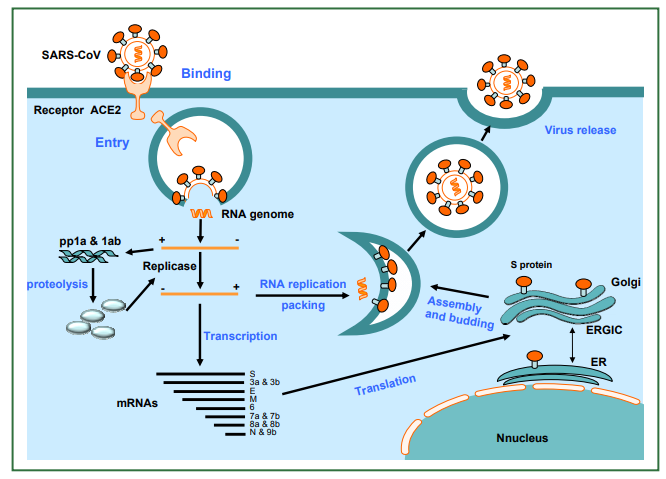
In cooperation with Professor Zhang Rongguang of the Institute of Biophysics of the Chinese Academy of Sciences and Academician Yuan Guoyong of the University of Hong Kong, Jiang Shibo’s research team first studied the fusion of Mars coronavirus and the mechanism of its entry into host cells. The researchers focused on the important S2 protein core functional region of Mars virus, obtained the three-dimensional structure map of this core functional region by crystallization technique, and designed and synthesized a series of virus fusion inhibitory peptides. Finally, it was found that one of the peptides could effectively inhibit the fusion and entry of Mars coronavirus into host cells. They named the peptide inhibitor HR2P, because it is a protein fragment from the HR2 domain of the S2 protein of Mars coronavirus.
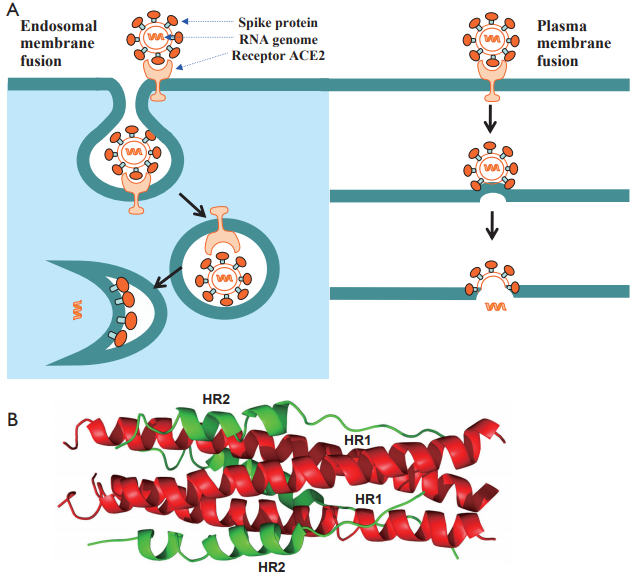
It is pointed out that the mechanism of peptide HR2P is that when Mars virus infects human cells, the HR2 functional domain of S2 protein, which is the key protein of Mars virus, must interact with the HR1 functional domain of S2 protein before it can be allowed to enter human cells for reproduction. The peptide HR2P they found can bind to the HR1 functional domain of Mars virus S2 protein in advance, thus blocking the binding between the HR2 functional domain and HR1 functional domain of Mars virus S2 protein, so that the virus can no longer infect human cells.
Jiang Shibo vividly said: “the HR1 and HR2 functional areas of Mars virus S2 protein are like people’s left and right hands, and their left and right hands must be held tightly in order to survive. The peptide HR2P we found deliberately created an identical fake right hand, and this false right hand can hold the real left hand in advance, creating the illusion of ‘clenching’, resulting in the real left hand being unable to hold with the real right hand, thus losing the condition to live. ”
The S gene of 2019-nCoV and the S gene of RaTG13 are longer than those of other SARSr-CoV. Compared with SARS-CoV, the main difference of S protein of 2019-nCoV is that three short insertion sequences in the N-terminal domain and four key amino acid residues in the receptor-binding motif have changed. Whether the insertion sequence of the N-terminal domain of the S protein of 2019-nCoV has the sialic acid-binding activity like that of MERS-CoV needs to be further studied.
Due to the lack of specific treatment and considering the affinity between SARS-CoV/MERS and 2019-nCoV, some drugs and preclinical vaccines against SARS-CoV/MERS may be used to fight the virus. Finally, in view of the widespread of SARSr-CoV/MERS in their natural virus libraries, future research should focus on active surveillance of them in a wider geographical area. In the long run, broad-spectrum antiviral drugs and vaccines should be prepared for future emerging infectious diseases caused by such viruses.
References
1. Zhu, X., Liu, Q., Du, L., Lu, L., & Jiang, S. (2013). Receptor-binding domain as a target for developing SARS vaccines. Journal of thoracic disease, 5(Suppl 2), S142.
2. Xia, S., Liu, Q., Wang, Q., Sun, Z., Su, S., Du, L., … & Jiang, S. (2014). Middle East respiratory syndrome coronavirus (MERS-CoV) entry inhibitors targeting spike protein. Virus research, 194, 200-210.
3. Chan, J. F. W., Yuan, S., Kok, K. H., To, K. K. W., Chu, H., Yang, J., … & Tsoi, H. W. (2020). A familial cluster of pneumonia associated with the 2019 novel coronavirus indicating person-to-person transmission: a study of a family cluster. The Lancet.
]]>