Peptide library is a group of a large number of several million or more peptides arranged in sequence, that is, the combination of amino acid sequences of peptides of this length. The peptide library is a series of peptides and amino acid chains, which are an important part of life. Peptide libraries can be produced by companies that specialize in peptides and other biological materials, or they can be produced in the laboratory. In a laboratory capable of synthesizing peptides, many researchers order peptide libraries from companies. Complete the order very quickly. Peptide libraries are generally available to anyone who wants to order. Like many biological materials used in research, peptides are not strictly controlled because they are not considered potentially dangerous. This also makes it easy for laboratories and researchers to quickly obtain the peptides they need. In contrast, dangerous biological materials such as viruses may be restricted.
Types of peptide libraries
The simplest combinatorial peptide library is the Parallel library. The peptides of each sequence in this peptide library are synthesized in a separate reactor to ensure the quality of the peptide library. This method has a small amount of synthesis and can improve efficiency through automation and microwave technology.
The second peptide library is the Random library, which generates millions of peptides with different sequences in each reactor, which facilitates rapid screening of a large number of peptides.
What is an overlapping peptide library
Overlapping Peptide Library-This tool allows you to generate overlapping peptides to cover the full length of the protein of interest. You can define sequence parameters, such as the length of the peptide segment and the number of amino acid offsets (see fig1). The designed sequence can be edited and exported to word or Excel format. The design of overlapping peptide library is mainly determined by the two parameters of peptide chain length and offset number. The design is gradually intercepted from the N-terminus of the target protein to the C-terminus. Each time one or a few amino acids are transferred, there is partial overlap between the sequences. Finally, an overlapping peptide library is formed.
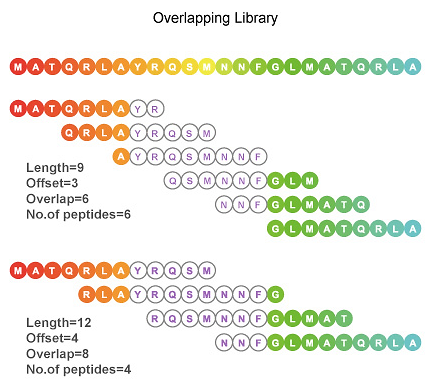
Figure 1. What is an overlapping peptide library
Production method
By artificially synthesizing genes encoding random polypeptide segments, and then cloning these genes into phage vectors, using phage epitope display technology to display the polypeptides one by one on the surface of the phage to construct a polypeptide library. Many peptide libraries are produced on solid supports such as resins or beads, and they can also be packed in vials or test tubes. Based on the specific interactions between biological macromolecules, small molecules that can mimic the biological functions and activities of specific biological macromolecules can be screened from the library through specific immune responses similar to antigens and antibodies.
Application areas of overlapping peptide libraries
Peptide libraries can be used in a wide range of research applications, and people hope to study combinations of various amino acids. Researchers who want to identify specific peptides or understand the role of peptides in cells can also use these peptide libraries. Like those engaged in drug development, peptide libraries can be used to identify active compounds. Other uses include protein purification and the development of synthetic vaccines. The peptide library can also be used to study intracellular signaling pathways. Overlapping peptide libraries design key short peptide sequences based on the target protein or long peptide, which can be used to identify antigen peptide sequences, screen enzyme substrates, and identify T cell epitopes.
References
- Lam K S, Salmon S E, Hersh E M, et al. A new type of synthetic peptide library for identifying ligand-binding activity[J]. Nature, 1991, 354(6348): 82-84.
- Schatz P J, Cull M G, Miller J F, et al. Peptide library and screening method[J]. EP, 2000.
- Reese G, Ayuso R, Leong-Kee S M, et al. Characterization and identification of allergen epitopes: recombinant peptide libraries and synthetic, overlapping peptides[J]. Journal of Chromatography B: Biomedical Sciences and Applications, 2001, 756(1-2): 157-163.
- Li X, Wang L, Zhao D, et al. Identification of host cell binding peptide from an overlapping peptide library for inhibition of classical swine fever virus infection[J]. Virus genes, 2011, 43(1): 33-40.
The peptide pool was first proposed by Geyson and his colleagues in 1986. They believed that: (1) The binding or recognition between protein molecules is mainly completed by the interaction between several amino acid residues on the partial peptide, and these amino acids form a non-covalent bond connection; (2) although some peptides have different sequences from the natural epitope of the antigen, they bind antibodies or ligands in the same way. Therefore, such peptides with key amino acid residues are called mimotopes. The concept of mimotopes played an important role in the development of random peptide pools.
Application of peptide library
1. Research on protein folding and three-dimensional structure prediction
Gething conducted research on protein folding. Researcher used an octapeptide library and Bip (immunoglobulin heavy chain-binding protein) as a model, and she has obtained preliminary results. The formation of protein spatial conformation starts from the mutual recognition of peptides (usually hexapeptides). The peptide library is used to study the mutual recognition of peptides, which provides experimental basis for the theoretical prediction of protein spatial conformation.
2. Molecular recognition
Molecular recognition includes many aspects, and the research in these aspects is currently the most. Common applications include mutual recognition between antigens and antibodies, mutual recognition between hormones and receptors, recognition between protein and DNA, and mutual recognition between protein and non-protein (such as avidin). Some people have used peptide library technology to screen and get liver cancer cell epitope peptide HCBP1 (FQHPSFI), hepatocellular cancer antibody binding peptide XC24p11, and liver cancer serum marker binding peptide HC1 (RGW-CRPLPKGEG). These polypeptides can be used to identify tumor surface markers, so that they can be developed as peptide probes for early cancer diagnosis.
3. Application prospects in enzyme engineering
At present, the application of peptide library technology in enzyme engineering is still relatively small. However, the application potential of peptide library technology in enzyme engineering is great. It can be used to screen enzyme inhibitors, activators, stabilizers, etc. Combined with X-ray diffraction technology and rapid reaction kinetics technology, it is possible to further study the mechanism of enzyme and substrate interaction, and the relationship between structure and function. In addition, it has great reference and guidance for enzyme modification, transformation, artificial enzyme design, protein engineering, etc.
4. Application prospects in other fields
Since peptide library technology has just started, many fields have not yet been developed, and its huge application potential has not been fully utilized. Work in these fields is urgently needed.
4.1 Drug design: such as receptor inhibitors, activator screening, hormone analogue screening (such as enkephalin analogues). The selected peptide fragments can be used directly as drugs, or they can be modified or referenced to their structure to synthesize organic drugs.
4.2 Disease detection: Some diseases are often accompanied by the production of special proteins, such as autoantibodies for autoimmune diseases, HIV antibodies for AIDS, etc. The screened peptides can be used as generation antigens for ELISA detection. Sarhin used peptide library technology to screen out two peptides DE532 (VETSQYFRGTLS) and DE-Obs (HNDLFPSWYHNY) that specifically bind to MKN-45 cells. These two peptides can be used as potential carriers for the diagnosis and treatment of gastric cancer.
4.3 Disease treatment: For some diseases with relatively clear pathology, the selected peptides can be used to block an intermediate link of the disease. For example, AIDS, HIV must infect CD4 cells to destroy the human immune system. Use peptides or their analogs that have a strong affinity for HIV to block the combination of HIV and CD4 cells, thereby blocking the destruction of the human immune system by HIV.
References
- Gething M J, Sambrook J. Protein folding in the cell[J]. Nature, 1992, 355(6355): 33-45.
- Zhang B, Zhang Y, Wang J, et al. Screening and identification of a targeting peptide to hepatocarcinoma from a phage display peptide library[J]. Molecular medicine, 2007, 13(5): 246-254.
- Hwang H M, Heo C K, Lee H J, et al. Identification of anti-SF3B1 autoantibody as a diagnostic marker in patients with hepatocellular carcinoma[J]. Journal of translational medicine, 2018, 16(1): 1-16.
- Zhang Z, Xu L, Wang Z. Screening serum biomarkers for early primary hepatocellular carcinoma using a phage display technique[J]. Journal of clinical laboratory analysis, 2011, 25(6): 402-408.
- Sahin D, Taflan S O, Yartas G, et al. Screening and identification of peptides specifically targeted to gastric cancer cells from a phage display peptide library[J]. Asian Pacific journal of cancer prevention: APJCP, 2018, 19(4): 927.