Peptide Drug DesignPeptide Engineering TechnologyStapled Peptide DevelopmentGLP-1 Peptide Drug Development
At Creative Peptides, we support enterprise-grade peptide drug discovery programs—from early concept to candidate nomination—by integrating medicinal peptide design, solid-phase synthesis, and developability-focused analytics. Peptides are increasingly prioritized across pharma and biotech pipelines, including high-investment areas such as metabolic disease, and are valued for their ability to engage challenging biological surfaces with high specificity. We help R&D teams move faster with a disciplined design–make–test cycle, robust impurity control, and decision-ready characterization packages suitable for internal governance and partner due diligence.
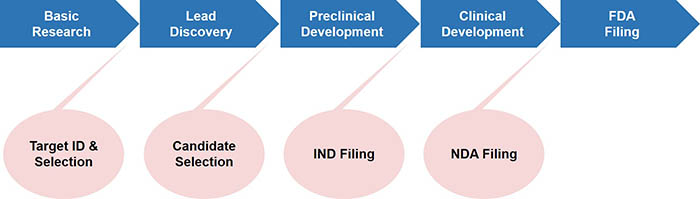 Peptide Drug Discovery Process
Enterprise discovery teams often turn to peptides when small molecules struggle to achieve potency or selectivity—especially for broad protein–protein interaction (PPI) interfaces—while still needing a modality that is manufacturable, characterizable, and scalable for development.
In today's market, peptide programs also face increased scrutiny on developability and delivery feasibility early in discovery (e.g., stability against enzymatic degradation and limited membrane permeability), alongside rising expectations for CMC-ready documentation and analytical traceability.
Creative Peptides provides integrated peptide drug discovery services designed for pharmaceutical companies, biotechnology innovators, and academic drug discovery centers. Our platform combines rational peptide design, automated synthesis, high-quality analytical characterization, and developability assessment to accelerate the transition from early discovery concepts to validated peptide lead candidates. Each service module can be deployed independently or integrated into a full discovery workflow depending on program needs and internal R&D capacity.
Successful peptide therapeutics begin with a clear understanding of the biological target and the appropriate molecular strategy. Our scientific team works with discovery groups to evaluate peptide feasibility and design strategies aligned with the therapeutic mechanism.
This step ensures that peptide discovery programs start with a scientifically sound design framework aligned with therapeutic and commercial objectives.
We support peptide hit discovery through rational design and diverse peptide library construction tailored to the target mechanism.
Our design strategies prioritize both biological activity and synthetic feasibility to streamline downstream optimization.
Efficient synthesis is essential for discovery-stage peptide programs that require rapid testing of multiple sequence variants.
Our synthesis infrastructure enables pharmaceutical discovery teams to quickly validate hypotheses and refine peptide leads.
After initial hits are identified, peptide sequences must often be optimized for stability, potency, and manufacturability. We assist discovery teams in engineering peptides suitable for further development.
These optimization strategies help transform early peptide hits into viable lead candidates for preclinical evaluation.
Rigorous analytical verification ensures that peptide candidates meet the purity and structural integrity requirements necessary for reliable biological evaluation.
These analytical workflows support confident interpretation of biological assay data during discovery programs.
Once peptide leads demonstrate promising biological activity, discovery programs often require larger quantities for pharmacology studies and formulation evaluation.
Our scale-up capabilities support this transition with controlled manufacturing processes.
In collaboration with specialized partner laboratories, we can support early biological validation of peptide candidates to accelerate decision making in drug discovery pipelines.
Available evaluation options include:
Selecting the appropriate peptide modality is a critical decision during early drug discovery. Different peptide architectures offer distinct advantages in terms of structural stability, target binding affinity, and pharmacokinetic behavior. Modern peptide therapeutics research explores multiple structural formats—from simple linear peptides to complex macrocyclic structures—to address diverse biological targets such as receptors, enzymes, and protein–protein interaction interfaces.
| Peptide Modality | Structural Characteristics | Discovery Advantages | Typical Target Types | Development Considerations |
|---|---|---|---|---|
| Linear Peptides | Short amino acid chains without structural constraints | Rapid synthesis and flexible sequence optimization | Hormone receptors, enzymes, ligand–receptor interactions | Often require stabilization to improve metabolic resistance |
| Cyclic Peptides | Head-to-tail or side-chain cyclized structures | Improved structural rigidity and binding affinity | Protein–protein interaction targets and enzyme inhibition | Synthetic complexity and conformational control |
| Stapled Peptides | Chemically crosslinked α-helical peptides | Stabilized secondary structure and improved cell permeability | Intracellular protein–protein interactions | Requires specialized synthesis and optimization |
| Macrocyclic Peptides | Large ring structures with constrained conformations | High affinity and selectivity for complex targets | Challenging protein interfaces and enzyme active sites | Discovery platforms often required for library generation |
| Peptide Mimetics | Peptide-like molecules incorporating non-natural structures | Enhanced stability and tunable pharmacokinetic properties | Diverse targets including receptors and signaling proteins | Medicinal chemistry optimization required |
During peptide drug discovery, sequence optimization and molecular engineering are essential to improve stability, potency, and pharmacokinetic performance. A range of chemical modification strategies are commonly used to enhance peptide therapeutics, including structural stabilization, half-life extension, and resistance to enzymatic degradation. These engineering approaches allow researchers to transform early peptide hits into viable drug candidates with improved developability.
| Engineering Strategy | Primary Objective | Common Methods | Impact on Drug Properties | Typical Applications |
|---|---|---|---|---|
| Cyclization | Increase structural stability | Head-to-tail or side-chain cyclization | Improved resistance to proteolytic degradation | Cyclic peptide inhibitors and receptor ligands |
| Stapling | Stabilize α-helical peptide structures | Hydrocarbon or chemical crosslinking | Enhanced structural rigidity and cellular uptake | Intracellular protein–protein interaction targets |
| PEGylation | Extend circulation half-life | Covalent attachment of polyethylene glycol chains | Improved pharmacokinetics and reduced renal clearance | Long-acting peptide therapeutics |
| Lipidation | Enhance membrane interaction and stability | Attachment of fatty acid chains | Improved albumin binding and extended half-life | Metabolic disease peptides such as GLP-1 analogs |
| Non-Natural Amino Acids | Improve metabolic stability | D-amino acids or modified residues | Reduced enzymatic degradation and improved potency | Peptide drugs requiring prolonged activity |
Our peptide drug discovery workflow is designed to support pharmaceutical and biotechnology research teams in efficiently progressing from target concept to optimized peptide candidates. By integrating rational design, automated synthesis, analytical validation, and developability assessment, we enable a streamlined discovery process that aligns with modern drug development practices. Each stage of the workflow emphasizes scientific rigor, reproducibility, and scalability to facilitate the transition from discovery research to preclinical development.
1
Target Assessment & Discovery Strategy
2
Peptide Design & Library Construction
3
Peptide Synthesis & Hit Identification
4
5
Developability Assessment
6
Candidate Preparation for Preclinical Studies

Integrated Discovery Expertise
Our multidisciplinary team combines expertise in peptide chemistry, structural biology, and medicinal peptide engineering to support complex drug discovery programs.

Advanced Peptide Design Strategies
Structure-guided peptide design and rational sequence optimization enable efficient exploration of peptide binding motifs for diverse therapeutic targets.

High-Throughput Synthesis Platform
Automated peptide synthesis technologies allow rapid production of discovery libraries and facilitate fast design–make–test cycles.

Developability-Oriented Engineering
Peptide optimization strategies focus on stability, solubility, and pharmacokinetic properties to support downstream drug development.

Robust Analytical Capabilities
Comprehensive analytical platforms including HPLC, LC-MS, and stability testing ensure accurate peptide characterization and reliable discovery results.

Scalable Production Support
Our synthesis infrastructure supports projects from early discovery peptides to larger quantities required for preclinical research studies.
Peptide therapeutics are increasingly recognized as a versatile drug modality capable of addressing a wide range of biological targets. Advances in peptide engineering, delivery strategies, and synthetic technologies have expanded their use across multiple therapeutic fields. Peptide drug discovery programs today are actively pursued in metabolic diseases, oncology, infectious diseases, and other high-impact medical areas where targeted biological modulation is required.
Peptide therapeutics continue to play an expanding role in modern drug development due to their ability to selectively interact with challenging biological targets. At Creative Peptides, our discovery platform integrates peptide design, synthesis, optimization, and analytical characterization to support pharmaceutical and biotechnology research programs. Whether your project focuses on metabolic disease therapeutics, oncology targeting peptides, antimicrobial peptide development, or other peptide-based drug discovery initiatives, our scientific team is ready to collaborate and provide tailored technical support throughout your research program.
Contact us today to discuss your peptide drug discovery needs or request a consultation with our scientists to explore potential research strategies and project solutions.
