Peptides are a class of compounds formed by linking multiple amino acids through amide bonds, and their molecular size is between small molecule chemical drugs and macromolecular biological drugs. Compared with small molecule chemical drugs, peptides have higher efficacy, selectivity and specificity, and lower metabolic toxicity. Compared with macromolecular biological drugs, peptides have lower immunogenicity and can penetrate deeper into the target, and continuous production costs are lower. Based on these unique advantages, in recent years, peptide drugs have attracted more and more attention. According to statistics, the growth rate of the peptide drug market is twice that of other drugs. At present, a variety of peptide drugs have entered the market for the treatment of diabetes, osteoporosis, cancer, multiple sclerosis, chronic pain, HIV infection and many other diseases.
As we know, active peptides are the material basis for drug efficacy, so in the development process of peptide drugs, the quality control of active peptides (API) is very important, and the control of peptide-related impurities is an important work of quality control, impurities not only affect the quality and safety of clinical trial samples, in the early stage of drug discovery, These impurities may also affect the judgment of drug efficacy, and inadequate research on impurities may even lead to incorrect conclusions.
Classification of Impurities and Ways of Production
- Impurities related to the synthesis process
Chemical synthesis technology is the gold standard for peptide production. The process was initially carried out in solution, and later solid-phase peptide synthesis was introduced. After decades of continuous development, the technology has become very mature. The steps of chemically synthesizing the polypeptide include: hanging resin-deprotection group-activation and cross-linking-peptide cleavage. In this process, the steps of deprotection, activation and cross-linking are prone to impurities, which are usually points that require quality control.
Missing peptide: As the name suggests, a missing peptide is a peptide that is missing one or more of the required amino acids, and the transient protective group of amino acids that is not completely removed, insufficient activation of the amino acid to be bound, or low cross-linking efficiency can lead to the production of the missing peptide. The identification method of the missing peptide, that is, the mass difference between the impurity and the target peptide observed in the mass spectrometry is the molecular weight of the missing amino acid minus water.
Insertional peptide: During the cross-linking process of synthetic peptides, amino acids are usually fed in excess. If the excess amino acids are not fully washed or the reaction time is too long, the amino acids will be cross-linked again to generate insertion peptides. For the identification method of the inserted peptide, the mass difference between the impurity observed in the mass spectrum and the target peptide is the molecular weight of the inserted amino acid minus water.
Misfolded peptide: It can arise when both amino acid deletions and amino acid insertions occur during a solid-phase reaction process.
Covalently attached peptide impurities: After solid phase synthesis, incomplete removal of permanent protective groups will lead to covalent attachment of protective groups to the peptide sequence, resulting in covalent attached peptide impurities. For the identification method of such impurities, if the molecular weight of the impurity in the mass spectrum differs from the molecular weight of the target peptide by 56 Da, then the attached protective group is the tBu protective group, if the molecular weight of the impurity in the mass spectrum differs from the molecular weight of the target peptide by 100 Da, then the attached protective group is the tBoc-TCS protective group.
- Degradation related impurities
Degradation related impurities include impurities formed by degradation mechanisms during manufacturing and impurities formed by degradation mechanisms during storage. The factors that cause the instability of peptide include oxidation, light, high temperature, pH, ionic strength change and adsorption, etc. The amino acid type and the position of amino acid in the peptide chain have important effects on the stability of peptide.
Epipeptide: it refers to the impurity formed by amino acid residues with one or more unexpected chiral configurations in the sequence, which may be derived from optical isomers in the starting materials, or amino acids during the synthesis by enolization or azalactonization of the chiral center. The chromatographic behavior of epi-peptide impurities is very close to that of the main component, and the molecular weight is also the same as that of the main component, so separation and identification are more difficult. Deuterated reagents can be used to hydrolyze and derivatize peptides, and the amino acids that are prone to racemization in the peptide chain can be judged by the content of chiral isomers of amino acids obtained from hydrolysis, and possible epimer peptides can be prepared by directional preparation. targeted research.
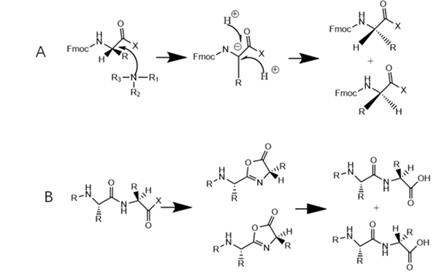
Broken peptide: Peptide bonds may be broken when peptide encounter high temperature or pH changes, resulting in broken peptides. Studies have shown that alkaline conditions are most likely to cause peptide bond breaks. The identification of the broken peptide is relatively simple, and which amide bond is broken can be inferred from the molecular weight difference between the impurity and the parent peptide.
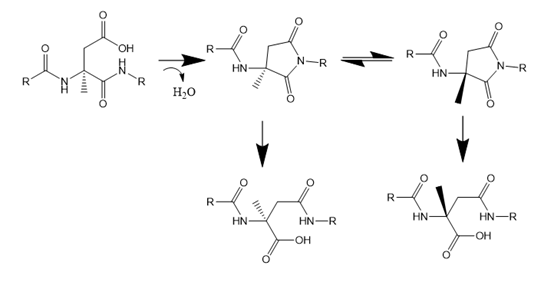
Deamidation impurities: When the peptide contains glutamine or aspartate residues, the amide bond may be removed to form glutamic acid or aspartate residues, which can be formed by two mechanisms, one is direct hydrolysis (easy to occur at pH<5), and the other is through β transformation (easy to occur under alkaline conditions), which attacks the carbonyl group on the side chain through the N atom of the amide bond in the main chain. Form a succinimide ring (a type of azalactone), which hydrolyzes under alkaline or neutral conditions to form a carboxyl group. The succinimide hydrolysis process is often accompanied by two side reactions, namely isomerization and racemization, and finally form four isomers with the same molecular weight. The identification of deamidation impurities is mainly through mass spectrometry, and the impurities detected with molecular weight +1 Da are usually deamidation impurities.
Isomerized impurity: Aspartic acid is an amino acid that is prone to isomerization. Aspartic acid is easily cyclized to the main chain due to dehydration or ammonia in the side chain to form succinimide. Succinimide has poor stability and is easy to hydrolyze. In the process of ring opening, isomers can be formed, and epi-peptide by-products can also be produced at the same time, and its formation mechanism is similar to that of asparagine deamidation.
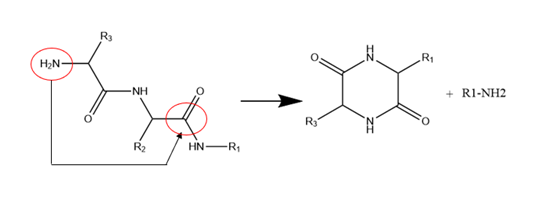
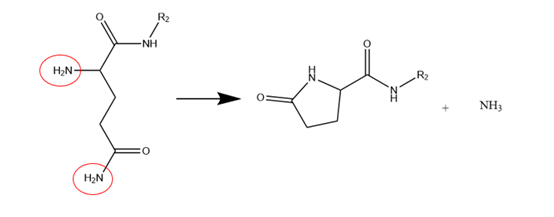
Diazinoperone and pyroglutamate: Diazinoperone refers to the N-terminal active group (usually an amino group) attacking the carbonyl group of the amide bond in the β-site main chain to form diketopiperazine analogens, resulting in a missing peptide with two amino acids, and the reaction is more likely to occur when the N-terminal amino acid hindrance is small. Pyroglutamic acid refers to the N-terminal containing glutamic acid which is cyclized to form pyrrolidone carboxylic acid. The impurity can be identified by mass spectrometry with a molecular weight of 17Da less than the parent peptide (NH3 removed).
Polymer: Intermolecular aggregation and self-association of peptides can lead to the formation of high molecular weight impurities known as polymers. There are two types of polymerization mechanisms: covalent and non-covalent. Non-covalent polymerization is formed by electrostatic or hydrophobic interaction, which is an intermediate state. When the solution concentration, pH or ionic strength changes, this force is easily weakened or disappears, and the polymerization state returns to the monomer state. when the peptide chain contains thiol or tyrosine, it can cause covalent polymerization through the formation of disulfide bonds or the formation of dityrosine. Covalent polymerization is a stable polymerization state that does not change with peptide concentration or pH, ionic strength, etc. Due to the further increase of molecular weight and volume of polymer impurities, it is easy to increase the immunogenicity and cause allergic reaction, so the content of polymer should be controlled reasonably. Polymers are usually detected by volumetric exclusion chromatography, which can be used in conjunction with mass spectrometry to determine the multiple of their polymers.
Oxidative impurities: Oxidative impurities are formed when peptides are exposed to oxygen and light during storage. Amino acids that are prone to oxidation include sulfo-containing amino acids, histidine, tyrosine, and tryptophan.
Peptide-related impurities are not only a problem that needs continuous attention in the GMP supervision during the drug development and production process, but also may cause misjudgment of developers in the early stage of drug discovery and development because of the antagonism of impurities or the super potency of the drug. Therefore, it is usually recommended to use peptides from different sources for retesting when carrying out biological tests to eliminate the influence of impurities on the drug efficacy.
References
- Muttenthaler M, King GF, Adams DJ, Alewood PF, Trends in peptide drug discovery. Nat Rev Drug Discov 20:309-325.
- V.Sanz-Nebot, I.Toro, Investigation of synthetic peptide hormones by liquid chromatography coupled to pneumatically assisted electrospray ionization msaa spectrometry:analysis of a synthesis crude of peptide triptorelin, Rapid Commun. Mass Spectrom,2001;15:1031-1039.
- Matthias D’Hondt, Nathalie Bracke, Related impurities in peptide medicines, Journal of Pharmaceutical and Biomedical Analysis 101 (2014) 2–30.
- Shikha Patel, Vivek K. Vyas, Priti J. Mehta, A Review on Forced Degradation Strategies to Establish the Stability of Therapeutic Peptide Formulation, International Journal of Peptide Research and Therapeutics (2023) 29:22.
- Brian Gregg,Aleksander Swietlow,Control Strategies for Synthetic Therapeutic Peptide APIs Part III: Manufacturing Process Considerations.
- Virender K. Sharma a& Nigel J.D. Graham , Oxidation of Amino Acids, Peptides and Proteins by Ozone: A Review, Ozone: Science & Engineering, 32: 81–90.
Multifunctional peptides, especially the GLP-1 agonists, have gained large-scale development in the metabolic realm. Cell-penetrating peptides technology has good targeting but such peptides have faced with the loss of bio-availability aspects. In fact, among those naturally existed polypeptides, some are representative agents with excellent therapeutic functions, such as Tumor Antigen-derived Peptides. In metabolic area like gut, microbes contain rich diversity of bacteria that can identify the protein fragments, degradation products, as well as new peptides produced by signaling molecules. With the deepening of microbiological studies, it will bring a wealth of opportunities for peptide therapeutics.
However, as for innovative peptide drug development, chemists must surpass conventional peptide technology. Among them, multifunctional peptides on behalf of a variety of pharmacological activities could be seen as an emerging technology in the field, such as double or even triple agonism. This method is based on genomic information needs. Obviously, in terms of knockout animals, only a single gene can be knocked out, which means there is no clear phenotype.
In addition, although the G protein coupled receptor (GPCR) has successfully identified several selective agonists and antagonists into clinical development, only a few of corresponding ligands can ultimately receive the drug approval. On one hand, drug development has provided effective biological systems and multi-target programs. While on the other hand, it provides opportunity for poly-pharmacological approaches aimed at patient population to complement more personalized treatment.
Specifically, current developing multifunctional peptides including antimicrobial peptide drug candidates always possess an additional biological function, such as immune-stimulating and wound healing. Multifunctional peptides have made advances in GLP-1 agonist field; several products have been approved for marketing and achieved great commercial success, including Byetta, Bydureon, Victoza, Lyxumia, Tanzeum, DOTA-cyclo(RGDfK) acetate, etc. In addition to multifunctional peptides, there is a focus on improving patient convenience and compliance, therefore, for the less frequent administration or oral GLP attempt, more efforts are in the conduct of clinical development.

In recent years, with the development of technology, the permeability of membrane element implant has emerged, including the cell-penetrating peptides. Taking penetrating or trans-activator of transcription (TAT) sequence as an example, it is necessary to make it realize arrival intracellular target. Such peptides are challenged by loss of potency for further functions. Another important aspect in the development of cell-penetrating peptides is that it must also consider whether the nature of the molecule is similar to those of small molecules, including low specificity, because the increase in the volume of distribution may lead to greater security risks.
It is worth mentioning that polypeptides can form conjugate together with small molecules, oligoribonucleotides and antibodies, as a new means to develop innovative peptide drugs with improved efficacy and safety role. For example, in the field of oncology, such a method has gained interest in the industry, more than 20 polypeptide conjugates in clinical trials.
The future development of polypeptide drugs will continue to rely on the advantages of native peptides, combing with traditional design concept to improve its weaknesses, such as the chemical and physical properties. In brief, new peptide technology, including multifunctional peptides, cell-penetrating peptides and peptide drug conjugates, will help expand the applicability of modern therapeutic peptides. Taking into account of all the factors above, it’s reasonable to believe a fact that peptides will have a vast prospect for medical needs, as an effective therapeutic treatment in the future.
]]>
To be more specific, the invention concerns a method for the preparation of immunogens comprising reacting at least one type of antigens or antigenic determinants which are for example of polypeptide, oligosaccharide or oligonucleotide nature. And the carrier complexes mainly consist of glycosides having a hydrophilic/hydrophobic part and hydrophobic compounds, which might show reactivity towards antigens or antigenic determinants.
1. Crosslinking for Polypeptides and Carrier Proteins
As for the immune response in animals, the molecular weight of most polypeptides is too small. Thus, after the crosslinking of polypeptides to a carrier protein such as KLH, certain antigen size can be enhanced to a higher level, as well as the immunity. Certainly, most customers would choose the crosslinking for KLH because its immunity is very good and it has been used in many trails as Blocking reagent. In addition, because there might be antibodies towards polypeptides (Glycopeptides) and carrier proteins in animals, false positive could appear during the process.
2. Use of Antibodies
Many biological molecules and antibodies are obvious to proteins and peptides, with strong linking capability, so antibodies can jointly occupy the main position in biomedical research. As is known, antibodies have been used in a wide range of areas, such as the characteristics of proteins, determination of dispersal protein analysis, as well as confirmation of other aspects of proteins. Examples can be found in early pregnancy diagnosis kits, protein microalloy, immunohistochemistry and conventional ELISA testing, peptide synthesis, etc. Due to the unique feature, in vivo treatment with antibodies has become a main tool. Successful models include Herceptin for the treatment of a special class of breast cancer, Lymphomas B-cells for particular type medication, and so on.
3. Antigen and Identification Region
In most situation, antigen and immunogen are able to exchange the use of the word, because the difference between them is very small. They mainly indicate certain interaction between molecules and immune system. Immunogen refers to a molecule that can make a biological immune system to occur immune response while antigen is referred as a molecule that relates to such immune response. Therefore, the two elements couldn’t be distinguished at a complete concept. Identification region (epitope) is a particular sequence that connects a single antigen molecule with the antibody; any antigen (antigen protein) is likely to have more than one antibody identification regions. For the production of antibodies, identification region that is easy for the identification of antibody could be the most ideal.
In fact, there are also some other issues for the crosslinking of polypeptides, such as the suitable peptide chain length. Short peptide is generally of no use unless there is sufficient reason, as there is sequence homology with the clan and other proteins. When it comes to the antibody production value, it could depend on many factors. Synthetic polypeptides, immune steps and animal physiological systems are just few of them.
]]>Generally, peptide involves in a wide range of areas of human body, such as hormones, nerves, cell growth and reproduction; its importance lies in regulating the physiological functions in vivo and cell activation, enabling to improve in vivo related enzymes and then promote permeability of middle membrane. In fact, peptide can ultimately produce a particular physiological effect by controlling the transcription of DNA or specific protein synthesis. Many peptides are involved in a variety of cell functions in the human body because they can synthesize cells and regulate the functional activity of cells. But, except for DOTA-cyclo(RGDfK) Acetate and Aviptadil Acetate, how many kinds of peptides are there?

Cytokine Mimetic Peptide
Using known cytokine receptors from peptide library to screen cytokine mimetic peptide has become a debated research in recent years. In terms of some countries, they have screened a spectrum of analog peptides, such as human erythropoietin, human thrombopoietin, human growth hormone, human nerve growth factor and interleukin-1, etc. Amino acid sequences of these mimetic peptides and their corresponding cytokine could be different, but they are possessed with cytokine activity, as well as the advantage of small molecular weight. These cytokines mimetic peptides are in preclinical or clinical studies now.
When insects are stimulated by external environment, they can produce a large number of cationic peptides with antimicrobial activity. And nearly hundreds of such antimicrobial peptides have been screened yet; the in vivo experiment has confirmed the discovery that a plurality of antimicrobial peptides not only own a strong bactericidal ability but also can kill the tumor cells as well. For example, the antimicrobial peptide D screening from silkworm in vivo has demonstrated great prospects in improving genetic engineering techniques.
Peptide for Cardiovascular Disease
Many plants medicines always show importance in blood pressure, blood fat, thrombolytic effects, and so on. They cannot only be used as drugs but also the dietary supplements. However, due to the uncertainty of its ingredients functions, their application has been limited. It has been found many active ingredients are small peptides, such as the active polypeptide isolating from soybean processing, which can be directly absorbed by the small intestine, enabling to prevent blood clots, hypertension and high cholesterol, but also delay the aging and improve body strength tumor.
Other Pharmaceutical Small Peptide
Small peptide drugs have gained considerable progress in many fields. For instance, scientists have found that a synthetic peptide (TP508) can promote wound regeneration of blood vessels, accelerating the skin depth of the wound healing. Researchers also found a small peptide (RTR) can be used to inhibit the inflammatory response. In fact, the screened two synthetic peptides can be utilized for the inhibition of osteoclast’s resorption in bones.
To be specific, peptides have been used for various applications including medication, food, disease, etc. In addition to these peptides discussed above, there are also some other kinds, such as diagnostic peptides, which can be significant in the diagnostic reagent, as an antigen to detect viruses, cells, mycoplasma, spirochetes and other microorganisms. Success requires continuous discovery, so does the life science research!
]]>
When we see the package insert, just like to get the “identity card” of the drugs, so the first we should focus on is the name, including generic name, trade name and chemical name. Actually, this is easy to understand, people also have a formal name , nickname, pseudonym, etc. Then, it’s the picture of drugs—drug structural formula. The formula is extremely important because it can decide all intrinsic properties of the drug. If the structural formula is different then it just like the photo has been changed–“identity” is not the person.
Secondly, drugs also have ID number—[Approval No.], which is unique. It’s available on the website of Food and Drug Administration. We can make fake complaints on those drugs without approval number or the symbol does not match.
Then, generic name is necessary and all the drug manufacturers must use it. That is to say, drugs on the market with a same generic name can come from multiple manufacturers. For example, in terms of Azithromycin tablets, there are 96 manufacturers and 126 manufacturers for injectable Azithromycin tablets, but the trade name is different. During the life, we usually buy a prescription only under the trade name, which might be likely to cause repeated drug use. Thus, it’s necessary to require a careful comparison of the chemical name and formula of drugs. Drugs with the same chemical name and structure decide medicines have the same drug efficiency, pharmacological and toxicological effects.
Why do so many similar drugs have similar generic name? Antibacterial agents could be a good example, such as cephalosporins: cefazolin, cefuroxime, cefotaxime, ceftriaxone, cephalosporins cefepime and lorraine, buserelin acetate, etc. With careful comparison of structure, it’s clear that they have a substantially identical structure, differing only in branches. Therefore, it’s necessary to pay attention to the drugs with common ancestry and family, to avoid side effects and increased drug resistance. In brief, learning the “identity” of drugs can give us a lot of helpful reminders and alerts.
]]>1. It can inhibit the growth hormone, thyroid stimulating hormone, insulin, and pancreatic glucagon secretion.
2. It can inhibit gastric acid secretion stimulated by the test meal and 5 pentagastrin, as well as the release of gastrin and pepsin.
3. It can significantly reduce the splanchnic blood flow, decline portal pressure, blood pressure and collateral circulation, enabling to reduce the blood flow to the liver.
4. It can reduce the secretion of gallbladder and pancreas, as well as internal and external secretion of stomach small intestine, enabling to reduce the activity of pancreatic cell protection.
5. It can inhibit the secretion of glucagon.
6. It can affect the gastrointestinal absorption and nutritional functions to a certain degree, such as liraglutide.

Indications:
It has been used for esophageal varices bleeding due to portal hypertension; gastrointestinal bleeding caused by peptic ulcer, stress ulcer, and erosive gastritis; the prevention and treatment of acute pancreatitis and its complications; pancreas; adjuvant therapy of pancreas, gall bladder, and intestinal fistula; acromegaly, gastrinoma, insulinoma and vasoactive intestinal peptide tumors.
Consumption Usage:
1. Upper gastrointestinal bleeding, mainly indicating the bleeding of esophageal varices: start by intravenous infusion of 250μg (within 3 to 5 minutes), followed by 250μg/hr infusion, and then it should be administered continuously for 48 to 72 hours after bleeding.
2. Pancreas, gall bladder, and intestinal fistula: start with 250μg/h infusion until the fistula closure, and then it’s the successor with 1 to 3 days.
3. Acute pancreatitis: 250μg/h for continuous 72 to 120 hours; prevention of complications of pancreatic surgery for five days in a row; the row ERCP examination should use the product within 2 to 3 hours before the surgery.
Adverse Reactions:
1. Small number of patients may have vertigo, tinnitus, flushing;
2. Injection of this product faster than 50μg/min will produce nausea and vomiting.
Precautions:
1. Banned from the allergy, as well as pregnant and lactating women.
2. Administration at the beginning might cause a temporary decline in blood sugar, so insulin-dependent diabetics should check the blood sugar every 3 to 4 hours.
3. It can be used to extend the hypnotic effecting time of hexobarbital and the effect might aggravate the role of pentene tetrazole. Thus, the two products cannot be used simultaneously.
4. The product should be administered alone, indicating this product should not be administered in combination with other drugs combined.
5. Arterial bleeding is not a somatostatin indication.
Specification:
Injection: 250μg, 3mg
Modern scientific advances in various diseases have been benefited from high-level peptide products, such as deslorelin acetate, GLP-1 (7-36) amide acetate, teduglutide, and so on. That’s why increasing researchers are focusing on peptide studies!
]]>In addition, bionics recently-obtained great achievements also include mimicking of aquaporin molecules (proteins that form pores in the membranes of cells) for desalinization; the production of spider silk with manufacturing strength and flexibility; the efficiency of the development in new light synthesis catalyst to improve the solar cell.

Bioinspiration has played an important role in efforts to solve problems related to health, energy efficiency, food safety and other biological issues (teduglutide). To achieve this, researchers must make better use of knowledge and expertise of biologists, ecologists, microbiologists or biochemists, and specialists in evolution, organization, cell level, or molecules.
The field of biomimicry mostly involves chemists, engineers and materials scientists. Over the past three months, Thomson Reuters Web of Science has included about 300 bionics papers, among which fewer than 8% is focused on biomimetics. And in most papers on biomimetics, the species involved are very monotonous. Taking the papers published last year as the example, more than 80% researchers consider only one species or refer to a biological element such as cells and enzymes in only a generalized way.
With around 1.5 million described species, and probably some 9 million eukaryotic species in existence, bionics research may still remain in the surface of biological inspiration. Biologists that have obtained a wealth of expertise can provide guidance for the diversity of natural and experimental systems. Understanding the characteristics of a particular organism can bring special applications. On the other hand, biologists can help researchers to the problem at hand with a particular species, environmental conditions or evolutionary match. For example, the general conditions of understanding the evolution of altruism, such as a high probability of repeated encounters, may be able to provide a reference for architects and urban planners, to promote cooperation among people.
Evolutionary biologists, in particular, could help biomimicry researchers to use entire species evolutionary chain to test the formation and function of environment-related theory. Comparative study has also found a species of copy limitations. Prosperity through evolution of species must have a lot of success factors, such as favorable genetic variation.
Currently, various funds are increasingly supporting research in innovative biological research and more applied factors. The following four points to promote more crossover between biology and biomimetics are as followed.
1. Changes to education could encourage bionics researchers to gain more biological expertise. At present, undergraduates engaged in bionics are more likely to choose the ‘application field’, such as engineering, architecture or chemistry. These students should be required to take courses in the area of biology, as well as chemistry and molecular biology.
2. We need textbooks that cover the basic concepts of biology principles, rather than just focusing on the applications.
3. Promoting the opportunities of interdisciplinary cooperation could also be helpful. In order to increase opportunities for the cooperation of biologists and bionics, we should convene an international conference, which could allow biologists and those interested in bioinspired applications to work together based on their probable ability to solve a problem.
4. Certain relevant enterprises should hire more biologists, because teamwork is the key to making bionics research gain more successes.
In brief, science research requires great teamwork, so it’s necessary to make scientists all over the world participate together, in order to achieve the goal of improving people’s modern life to a better degree.
]]>
1. Will concert help the postoperative rehabilitation of patients?
Scientists have found that music can help relieve the pain and fear of patients after surgery. The team led by Catherine Meads has published a paper which pointed out listening to music can reduce the desire for patients to have painkillers for the purpose of increasing their satisfaction. However, it does not contribute to shorter hospital stays.
Scientists have studied the impact of music during the surgery and post-operative process, enabling to find a fact that music also has an impact on coma patients.
2. Will mothers keep the children’s DNA after postpartum period?
The answer is “yes”. This phenomenon exists in many mammals, including human beings. Such phenomenon is called fetal micro-chimerism. During the pregnancy, some cells of fetus are transferred to the body of mothers, or even to survive in the body of mothers, as an organ cell.
3. Can beetle really be immune to the extinction?
Actually it’s not, but beetle does have a special resistance to certain substances. It’s estimated that only 35 completely extinct among the existed 214 beetle families for over 300 million years. In fact, beetle is currently the most common species. The powerful resistance of beetle towards extinction is mainly derived from the flexibility to adapt to changing habitats and capabilities, as well as the ability to change the population that survives in different environments.
4. What’s the validity of military food?
In terms of the species, nutritional value and expiration date and other terms, the US military food can be seen as the reference. US forces are using the separately packaged foods, usually valid for up to five years. The product will be tested in order to confirm whether it can be saved to five years in good condition. It will be possible to make it below 27 degrees Celsius. If the temperature is too high, the shelf life will be greatly shortened. If the temperature reaches 37 degrees, the shelf life only remains nine months.
5. Will the nail grow more slowly in winter?
The answer is “yes”. The average growth rate of toenails and fingernails are monthly 1.5 mm and 3 mm. In the coldest season of the year, the growth rate declined slightly, but the scientific community is not clear about the cause. Maybe it’s because of less sunshine time. Such factor will also affect the blood circulation and hair growth.
In brief, we should admit that technology is very useful and important. Without science and technology, man’s life would not be as convenient as today. Science will continuously benefit people’s daily life!
]]>
1. When will people lose the ability to learn new words?
The latest research shows that people around the age of 60 began to lose the ability to learn new words. However, on the other hand, the stage is relatively late while compared with some other skills, such as the stage that begins to lose the ability to remember looks of strangers (mainly 20 years old) and interpret other emotions (40 years old).
2. What’s the function of zebra’s stripes?
In terms of those black and white stripes on a zebra, there are many assumptions, such as repelling mosquitoes, creating visual illusion for predators, facilitating mutual recognition, as well as regulating body temperature among similar partners. Biologist Brenda from the University of California has found that the higher the temperature is, the denser the zebra’s stripes could be. Since the heat absorption of black is higher than that of white, the difference can be produced to play the role of conditioned air flows around the skin.
In addition, more stripes can help to drive blood-sucking insects because they prefer hot and black hair animals, such as buffalo. In fact, zebra is born black, while those white stripes are always generated because of suppressed pigmentation results. Each zebra’s stripes are different from others’, which could be formed in the embryonic stage.
3. Will people suffer from hair loss because of tension?
Physical or psychological stress can cause hair loss (as much as three-quarters), which belongs to telogen effluvium. In general, this is a temporary disorder. Thus, when the anxiety disappears, the hair will back to normal, but some people will suffer from cyclical symptoms. Tension will lead to another kind of alopecia, namely the alopecia areata, which is always characterized as a specific range of hair loss, usually within a circular range.
4. Why women suffer from color blindness less?
Because color blindness is decided by X chromosome, and women have a pair of X chromosomes, while males only have one X chromosome. If one of the two chromosomes is healthy, then the other one will not be defective to conduct gene expression. Therefore, women can better avoid this disease.
5. Does the fresh of apple own convergent effect?
In essence the answer is “Yes”. Apple is rich in insoluble fiber, which is seen as the ideal substance to promote bowel movement. On the other hand, apple’s fresh is rich in pectin, which is another type of fiber. Such element can help to inhibit the diarrhea stool frequency. In addition, left flesh could produce tannin after growing dark, which is also a convergent effect of ingredients.
Science, as the focus of social concerns, is continuously affecting people’s daily life. Further advances in science will benefit people more, with high-level efficacy in various research fields.
]]>Generally, most venture capitalists can consider the existing demand for treatment, research and development as well as the feasibility of a variety of factors before they actually make a choice. It’s reported that venture capitals have payed much money in a number of principal human organs. So, which parts of the human body are the most popular for venture capitalists?
Let’s first take a look at the total amount of money that venture capitalists spend on major organs of the body since these years.
Not surprisingly, both the heart and brain are vital for survival, but those organs that could be the positions for a variety of diseases also attract the maximum amount of investment. The immune system, bones, the endocrine glands have followed the rank. Surprisingly, the current investment fever, such as liver disease, does not seem to be the focus of investment.
1. Heart
Heart disease is one of the most common causes of death. And in terms of the entire medical device industry, heart series of instrument has once been the hottest areas. However, in recent years, some venture capitalists have dropped out of the field of medical devices, which leads to the decline of heart investment. In addition, partial venture capitalists who remain in the cardiovascular field also choose to exist the current mechanism.
2. Brain
With the recent advances in Alzheimer’s disease, Parkinson’s disease, the treatment of depression and other fields, modern medical research has achieved a breakthrough; venture capital institutions’ interest on brain diseases has increased sharply. They not only invest on drugs and medical devices, they also increase certain startups investment on the development of therapeutic software, computer games and other digital technologies.
3. Immune System
Abnormal immune system c an lead to a variety of diseases. In response, many start-up companies are competing to develop innovative therapies, among which the most dazzling is the cancer immunotherapy. In addition, some new treatments are constantly emerging, which can treat autoimmune diseases by regulating inflammation. These factors make the immune system attract investment fever in recent years.
4. Bones and Joints
After the investment boom of plastic surgery products in 2005-2007, venture capitalists’ interest in the field of orthopedics is generally declined.
5. Endocrine Glands
Diabetes is current protagonist in the field of medical care. A lot of investment comes into the field of type II diabetes, which accounts for about 95% of the total cases of diabetes. In addition, some companies are developing cell therapies to treat type I diabetes, which can make patients avoid from the insulin injections. A large number of companies have benefited from the share.
6. Eyes
Glaucoma, macular degeneration and other eye diseases in the years between 2013 and 2014 have absorbed large investment, but this boom has retreated in 2015, returned to the previous level. The details show that venture capitalists have come into a phase of rest to prepare for the next wave action. Another possible reason is that they no longer venture capital needs along with some ophthalmic drug companies successfully listed.
7. Blood
Investment in the field of blood diseases has increased in recent years, which might because venture capital firms have recently turned to the field of rare disease. Some rare diseases are also blood disorders, such as hemophilia and paroxysmal nocturnal hemoglobinuria, and so on.
8. Lung
Some areas of respiratory diseases, such as asthma and chronic obstructive pulmonary disease, have obtained a more stable cash flow from the venture. What is worth noticing is that the last few strokes of large investment flows to the field of cystic fibrosis, which is a hereditary lung disease.
9. Gut
Crohn’s disease and ulcerative colitis as well as other inflammatory bowel diseases could be a hot spot for investment enteropathy field. Currently, injecting drugs of Johnson/Abbvie might be the main treatment for such diseases. However, some venture capitalists are interested in turning the focus to those small companies that develop oral drugs.
10. Kidney
Venture capitalist s are investing in those startups that develop disease treatments upon kidney stones, chronic kidney disease, acute kidney injury and renal cell cancer and other diseases. Renal cell carcinoma is the most common cancer of the kidney.
11. Skin
Start-up companies in this area mainly focus on diseases ranging from the most deadly cancer to the ailments such as melanoma. In addition, some companies that focus on beauty products also prefer to attract investment.
In fact, creative peptides are also the concern for modern life sciences research. The natriuretic peptides are a family of related hormones that play a crucial role in cardiovascular and renal homeostasis, such as l-methionine sulfone. Briefly, science is continuously attracting attention!
]]>