At present, the number of endogenous and exogenous bioactive peptides under study is rapidly increasing, and most of these peptides are easily to be degraded by enzymes, which will greatly reduce the therapeutic effect. These peptides can usually be converted to more resistant molecules by making the necessary modifications.
Unusual amino acids are not naturally encoded amino acids. They can be naturally produced by post-translation of plants or bacteria, or chemically synthesized. Peptides modified by these amino acids tend to exhibit unique biological activities and are often included in therapeutic peptide ligands to provide pharmacological activity and potency of the peptides.
Creative Peptides provides the unusual amino acids modified peptides are:
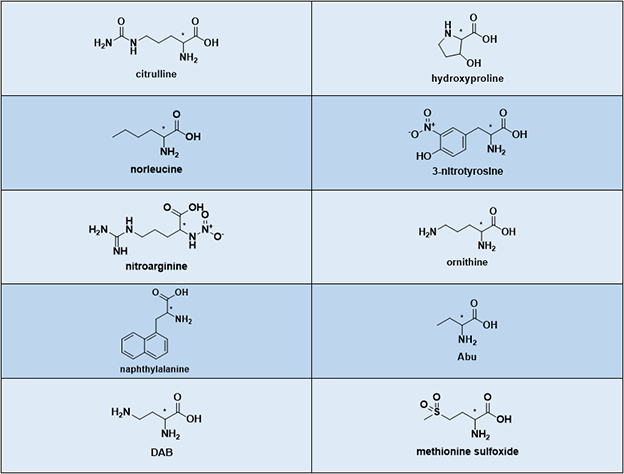
Creative Peptides provides a complete range of unusual amino acid peptide modification services, and we also can provide customers with special amino acid synthesis to meet your specific needs for modification. Every step of peptide synthesis is subject to Creative Peptides’ stringent quality control. Typical delivery specifications include:
Unusual amino acids are non-standard amino acids not naturally encoded in the genetic code. They can be chemically synthesized or produced by plants or bacteria. These amino acids are incorporated into peptides to enhance their biological activities, improve receptor binding, and increase stability.
Modifying peptides with unusual amino acids can improve their resistance to enzymatic degradation, which significantly increases their stability in biological environments. This leads to longer-lasting effects and improved performance for peptide-based applications.
Incorporating unusual amino acids into peptides enhances receptor binding, improves selectivity, and can modify peptide activity (e.g., making them more potent agonists or antagonists). These modifications are crucial for improving the efficiency and specificity of peptides in various research and industrial applications.
Unusual amino acids can alter the hydrophobicity or charge of peptides, facilitating their transport across cell membranes. This modification helps peptides enter cells more effectively, making them useful in drug delivery and intracellular research applications.
Yes, modifications with unusual amino acids can increase the peptide's half-life in vivo by making them less susceptible to enzymatic degradation. This results in more sustained biological activity and longer duration of action.
Creative Peptides offers a variety of unusual amino acids, including D-amino acids, N-methyl amino acids, and other non-standard amino acids. These can be used to create peptides with enhanced bioactivity and stability, depending on the specific needs of your project.

References
