Phosphorylation is a ubiquitous and essential post-translational modification (PTM) by covalent addition of a phosphate (PO43) group to a protein or other organic molecule. Phosphorylation of peptides is the most common and important method of post-translational modification of peptides, which is the most important regulatory modification form in prokaryotic and eukaryotic organisms. The mechanism of peptide phosphorylation is that the process of transferring the phosphoric acid group of GTP or ATP γ-position to the protein amino acid residue on the basis of kinase catalysis, which occurs mainly on the hydroxyl groups of serine, tyrosine and threonine residue side chains. It plays an important role in signaling between cells. It also can conduct extracellular signals and coordinate intercellular information, regulate gene expression and protein synthesis. Besides, it has important effects on almost all life activities, such as cell growth and differentiation.
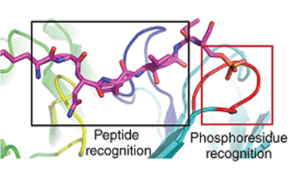
Creative Peptides has developed a reliable procedure for the synthesis of phosphorylated peptides. we can provide global customers with phosphorylated peptides based on our excellent technology. Creative Peptides has extensively developed phosphorylated peptides structures and is the company of choice to manufacture your requirements, providing a confidential and efficient service at competitive prices. We offer peptide phosphorylation synthesis on pSer, pTyr, or D-pSer, D-pTyr, D-pThr. We can also place phosphorylation site at multiple positions. Although multiple phosphorylated amino acids can be added, they can negatively affect peptide synthesis and purification.
Our experienced scientists will tailor the most appropriate methods and 100% guaranteed service for customers. Every step of peptide synthesis is subject to Creative Peptides’ stringent quality control. Typical delivery specifications include:
Peptide phosphorylation is the addition of a phosphate group to a peptide, typically on serine, threonine, or tyrosine residues. It is a critical post-translational modification that regulates many cellular processes like gene expression, metabolism, and cell signaling.
Phosphorylation plays a vital role in regulating cellular functions, including signal transduction, protein synthesis, and gene expression. It helps cells respond to external stimuli and coordinate intercellular communication.
Phosphorylation typically occurs on the hydroxyl groups of serine, threonine, or tyrosine residues in peptides. These sites are essential for regulating cellular signaling pathways and functions.
Yes, phosphorylated peptides like casein phosphate peptide (CPP) are used in functional foods to enhance mineral absorption (e.g., calcium, iron) and improve biological utilization, benefiting human health.
Creative Peptides applies stringent quality control at every step of peptide synthesis. We provide HPLC chromatograms, mass spec analysis, and certificates of analysis to ensure the purity and integrity of our phosphorylated peptides.
Yes, multiple phosphorylation sites can be incorporated into peptides, though this can affect the peptide synthesis and purification process. Our experts tailor methods to optimize these modifications while maintaining peptide quality.
We offer phosphorylation on serine (pSer), tyrosine (pTyr), threonine (pThr), as well as on their D-forms, and can place phosphorylation at multiple positions within the peptide sequence.

References
