The research of peptide drug has great potential, such as the discovery of new peptides, more targeted peptide library and sequence optimization design, the research and development of new formulations, multifunctional peptides and complexes, and so on. In order to achieve these, the identification of peptides and the analysis of peptide sequences are the first step to promote the research. Creative Peptides is not only experts in peptide synthesis of various peptide forms and peptide-based products, but also provide peptide sequence analysis services to support many different applications.
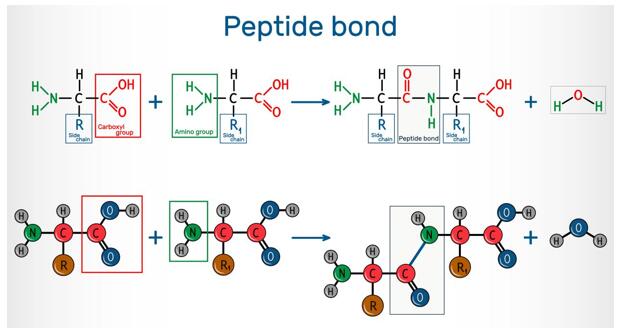
The following characteristics are calculated, estimated and predicted according to analysis of peptide sequence:
We use NanoLC-MS/MS to obtain the amino acid sequence of the peptide. For short peptides, such as less than 30 amino acids, we directly carry out secondary fragmentation to obtain the original mass spectrometry data for the derivation of the peptide sequence, through the database search or de novo sequencing, the theoretical sequence can be obtained. For longer peptides (> 30 amino acids), we will use three kinds of proteases to digest and identify the target peptides respectively, and at the same time, 100% of the peptide sequence can be determined by splicing between peptides. Below is a list of our available tools for peptide analysis (include but not limited to the following):
Peptide sequence analysis determines the amino acid sequence of peptides, aiding in protein identification, post-translational modification detection, and peptide property prediction, which is essential for drug development and proteomics.
NanoLC-MS/MS is used for peptide sequence analysis. Short peptides undergo secondary fragmentation for sequence derivation, while longer peptides are digested with multiple proteases, followed by splicing and sequence validation.
It supports protein identification, modification detection, peptide synthesis optimization, and predicts properties like charge and hydrophobicity. It is key in drug discovery and proteomics.
Tools include Regression Analysis, Hidden Markov Models, Bayesian Networks, Support Vector Machines, and Artificial Neural Networks for accurate sequence identification and property prediction.
It enables the identification of novel peptides, optimizes peptide libraries, and supports the design of multifunctional peptides, crucial for developing effective peptide-based therapies.
Creative Peptides combines advanced tools like NanoLC-MS/MS, protease digestion, and computational models to provide precise, reliable, and comprehensive peptide sequence analysis services.

References
